1.1.1 - Acuity First Clinical Triage
Why it matters
- COMLEX Level 3 repeatedly tests whether you recognize the sick patient before you name the exact disease.
- Many wrong answers are technically reasonable for a stable patient but unsafe when the stem contains one instability clue.
- Initial triage logic determines everything downstream: test choice, treatment timing, consultation, and disposition.
- In osteopathic practice, whole-person care still begins with safety; OMT is deferred when red flags or physiologic instability are present.
Exam takeaway: Separate immediate threats from diagnostic refinement before choosing tests or disposition.
flowchart TD
A[Patient presents] --> B{Immediate threat?}
B -->|Airway/Breathing/Circulation/Mental status| C[Stabilize now]
B -->|No immediate threat| D[Focused history and exam]
C --> E[Parallel targeted testing]
D --> F[Risk stratify]
F --> G{Needs urgent escalation?}
G -->|Yes| H[ED, admission, or consult]
G -->|No| I[Outpatient workup and follow-up]
See Fig 1 for the governing structure of this lesson: first decide whether the patient is unstable, then decide what action advances care fastest without adding preventable harm.
Key Terms & Must-Know Facts
1.1.1.1 Key terms
- Acuity: urgency based on risk of rapid deterioration, not on how dramatic the complaint sounds.
- Instability: abnormal physiology or exam findings suggesting immediate threat to life, limb, organ, fetus, or public safety.
- Triage: prioritization of care based on urgency and resource need.
- ABC: airway, breathing, circulation; often expanded to disability and exposure.
- Hemodynamic instability: hypotension, shock, poor perfusion, rapidly worsening tachycardia, or need for vasopressor-level concern.
- Disposition: destination and level of care after initial assessment.
- Red flag: specific clue that elevates urgency or rules out outpatient management.
- Best next step: the single action that most improves safety or diagnosis right now.
- Parallel processing: stabilize while obtaining key tests rather than delaying care for complete data.
- Time-sensitive diagnosis: condition where delayed treatment worsens outcome even if diagnosis is not yet fully confirmed.
- Observation status: short-term monitored reassessment for unresolved but not yet admission-level risk.
- Contraindication to OMT: circumstance where manipulation could worsen instability or delay essential management.
1.1.1.2 Must-know facts
- One instability clue can outweigh many reassuring details.
- Vital sign abnormalities are diagnostic data, not background noise.
- Altered mental status is an acuity sign until proven otherwise.
- Hypoxia, hypotension, active bleeding, focal neurologic deficit, and severe respiratory distress demand immediate action.
- Do not send home a patient who cannot maintain airway, oxygenation, perfusion, or reliable follow-up.
- Tests that do not change immediate management should not delay stabilization.
- Pain alone does not prove instability; pain plus peritoneal signs, shock, or syncope may.
- Sepsis, ACS, stroke, ectopic pregnancy, PE, GI bleed, and aortic catastrophe are classic triage traps.
- OMT is generally deferred in undifferentiated instability, fracture, acute abdomen, severe infection, or cardiopulmonary compromise.
| High-yield clue | Why it matters | Immediate implication |
|---|---|---|
| Hypotension with cool extremities | Perfusion failure | Resuscitate and escalate before broad diagnostics |
| Oxygen saturation falling or severe work of breathing | Impending respiratory failure | Airway/oxygen/ventilatory support comes before routine imaging |
| New confusion or lethargy | Brain hypoperfusion, hypoxia, toxin, infection, or metabolic emergency | Treat as unstable until reversible causes are addressed |
| Chest pain plus diaphoresis or syncope | High-risk cardiopulmonary process | Immediate ECG and monitored setting |
| Pregnancy plus abdominal pain or bleeding | Ectopic pregnancy must be considered | Pregnancy status changes triage threshold |
| Fever plus hypotension or organ dysfunction | Possible sepsis | Early fluids, cultures, antibiotics, admission-level thinking |
Core content
1.1.1.3 Foundational triage question: Is this patient unstable right now?
A Explanation
The first decision conflict is not “What is the diagnosis?” It is “Can this patient safely remain in the current evaluation pathway, or is there an immediate threat that must be treated now?” The single rule that resolves this is simple: if airway, breathing, circulation, mental status, or active catastrophic process is threatened, stabilization outranks diagnostic completeness. WHY THIS IS TESTED: exam writers hide one decisive instability clue inside otherwise ordinary presentations. Choose interventions that protect oxygenation, perfusion, neurologic function, or hemorrhage control; reject slower options that would only be appropriate after the patient is stabilized.
Use a mental scan: airway patency, respiratory effort and oxygenation, blood pressure/perfusion, mental status, severe pain with shock, uncontrollable bleeding, and rapidly progressive symptoms. A normal-looking chief complaint does not equal low acuity. Conversely, dramatic symptoms in a patient with normal vitals and benign exam may permit a more measured workup. The core move is to let physiology outrank label. See Fig 1 for this sequencing.
Key rule: If the answer choice “order more tests first” would delay treatment of airway compromise, hypoxemia, shock, severe sepsis, stroke, STEMI, active hemorrhage, or ectopic pregnancy, reject it.
Memory anchor: Think “A-B-C-D-Don’t Delay”: Airway, Breathing, Circulation, Disability/mental status, then do not delay the action that corrects the threat.
Exam takeaway: Read posture, work of breathing, skin perfusion, and mental status before anchoring on the chief complaint.
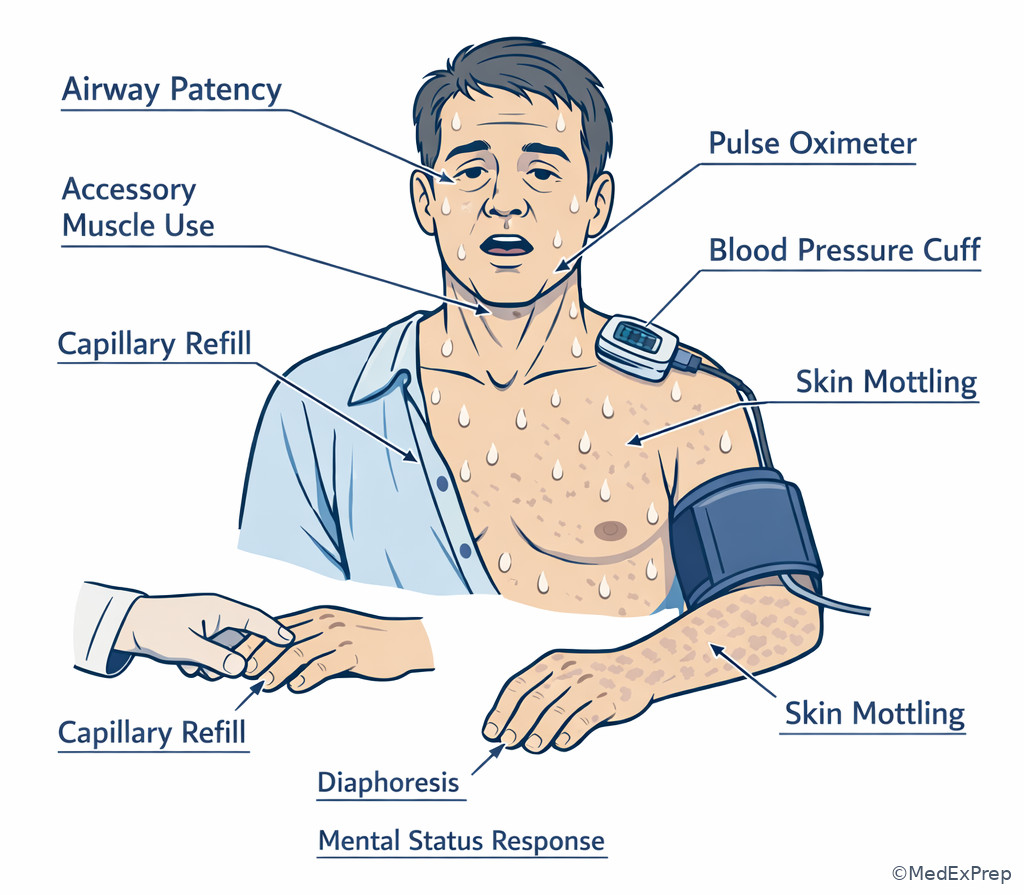
See Fig 2 for the nonverbal clues the exam often encodes as “appears ill,” “speaks in one-word sentences,” or “somnolent but arousable.”
B Worked example
A 67-year-old man presents to urgent care for “indigestion” after lunch. He has diabetes, hypertension, and CKD stage 3. He says he felt mildly nauseated and sweaty while climbing stairs. He took antacids with little relief. Temperature is 36.8°C, heart rate 112/min, blood pressure 92/58 mm Hg, respiratory rate 24/min, oxygen saturation 93% on room air. He also mentions long-standing reflux and tenderness over a chronic trapezius trigger point.
Identify task: This is a triage/stabilization question, not a GERD management question. Extract key facts: diaphoresis, exertional onset, tachycardia, hypotension, borderline hypoxemia, high-risk comorbidities. Apply rule: possible ACS with hemodynamic instability requires immediate monitored evaluation and ECG, not outpatient reflux treatment. Eliminate distractors: antacid escalation is tempting because of “indigestion,” and OMT for chronic musculoskeletal tenderness is tempting because of the trigger-point clue, but both ignore instability. Verify: the best next step is emergency transfer/ED-level management with ACS evaluation and stabilization.
C Exam trap
Common wrong answer: Start outpatient proton pump inhibitor therapy.
Why it is tempting: The stem labels the symptom as “indigestion,” and diabetics often report atypical ischemic pain.
Single clue that eliminates it: Hypotension with diaphoresis converts a dyspepsia-looking complaint into a high-acuity cardiopulmonary problem.
D Checkpoint
Question: A 54-year-old woman presents with shortness of breath, anxiety, and chest tightness after a stressful meeting. She has asthma and panic disorder. Blood pressure is 84/50 mm Hg, pulse 128/min, oxygen saturation 88% on room air, and she is speaking in single words. Which is the most appropriate next step?
- Administer a benzodiazepine for presumed panic attack
- Obtain a chest radiograph before any treatment
- Provide immediate oxygen and urgent stabilization while evaluating the cause
- Schedule outpatient pulmonary function testing
Answer: C.
- A: Tempting because anxiety and chest tightness can fit panic disorder; wrong because hypotension and hypoxemia demand physiologic stabilization first.
- B: Tempting because pulmonary causes are possible; wrong because imaging cannot precede immediate support in an unstable patient.
- C: Right because the decisive finding is respiratory and hemodynamic instability, which determines the next step before diagnostic refinement.
- D: Tempting if one focuses on chronic asthma management; wrong because outpatient testing ignores current instability.
Clinician Action: Diagnose instability using vital signs, work of breathing, perfusion, and mental status. Order immediate bedside monitoring and targeted tests only in parallel with stabilization. Treat oxygenation, perfusion, bleeding, or neurologic threat first. Refer/Escalate to ED, ICU, stroke, cath, OB, trauma, or surgical pathways when the physiology or suspected diagnosis warrants higher-level care.
1.1.1.4 Foundational triage thresholds: Which clues mandate emergency escalation?
A Explanation
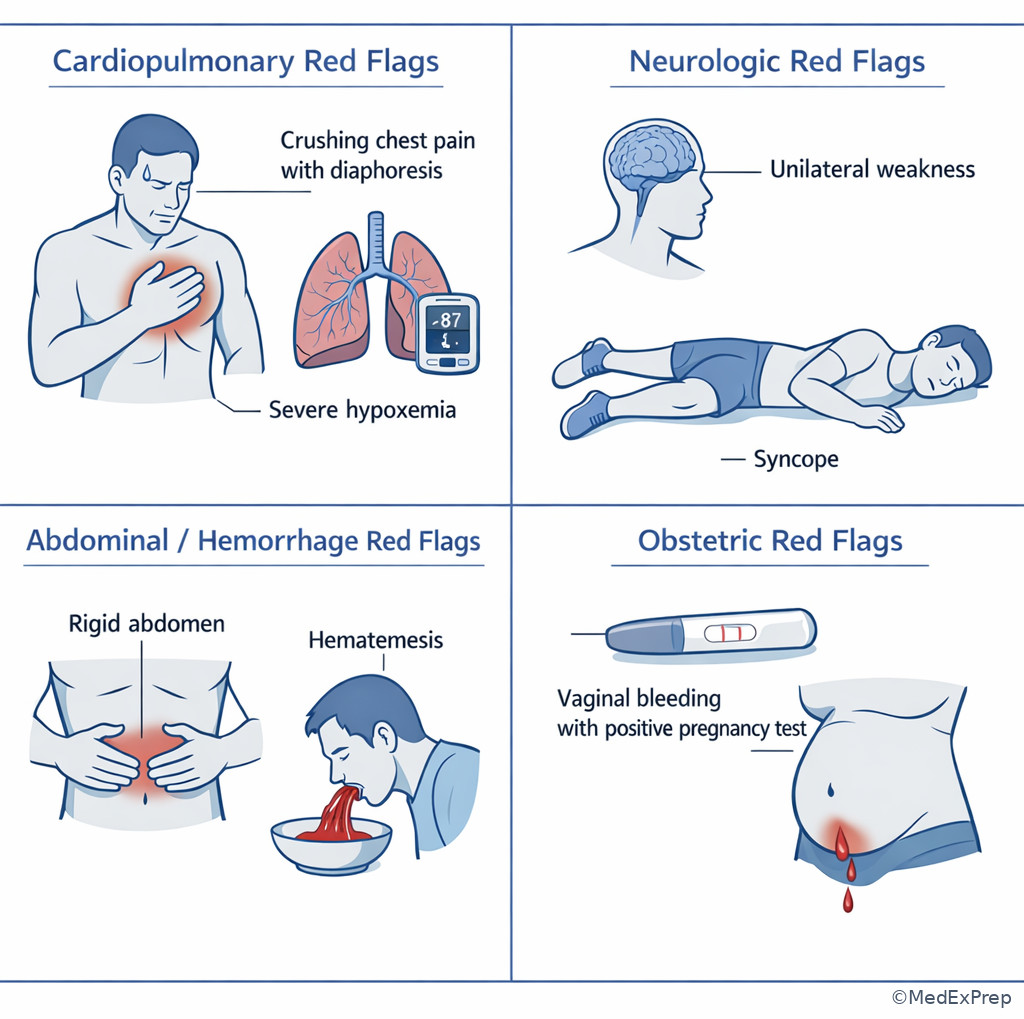
The second decision conflict is choosing between routine evaluation and emergency escalation. The resolving rule is that certain red flags have high enough consequence that they raise the level of care even before the full diagnosis is known. These include severe hypoxemia, hypotension, syncope with concerning symptoms, unilateral neurologic deficit, severe abdominal pain with peritoneal findings, active GI bleeding with instability, pregnancy plus pain/bleeding, high fever with organ dysfunction, and chest pain features concerning for ACS, PE, or aortic catastrophe. WHY THIS IS TESTED: stems often contain distracting chronic conditions, medication lists, or minor abnormal labs to make a dangerous presentation look routine.
Emergency escalation means more than “be concerned.” It usually means monitored setting, ED transfer, immediate consultation, or admission-oriented management. A patient may still be awake, talking, and even ambulatory and yet require emergency care. The testable distinction is not appearance alone but risk of rapid deterioration or missed time-sensitive disease. In triage language, “could worsen before outpatient follow-up” matters more than “not yet crashing.” See Fig 3 for a compact escalation framework.
Recall: This is the first topic in the sequence, so there is no prior lesson to review. In the upcoming topic Best Next Step Logic, we will build from this by asking what action best advances care once acuity has already been classified.
Exam takeaway: One red flag can move the patient from office-style workup to emergency pathway.
flowchart TD
A[New patient complaint] --> B{Red flag present?}
B -->|Hypotension hypoxemia AMS focal deficit hemorrhage pregnancy pain/bleeding| C[Emergency escalation]
B -->|None| D[Focused outpatient or inpatient workup]
C --> E{Needs specialist pathway?}
E -->|Yes| F[Stroke ACS trauma OB surgery consult]
E -->|No| G[Monitored ED or admission care]
D --> H[Reassess if new data worsens risk] Exam takeaway: Pattern recognition across organ systems prevents anchoring on a single specialty diagnosis.
B Worked example
A 29-year-old woman presents to clinic with lower abdominal pain and light vaginal spotting. She has migraine, IBS, and a prior ovarian cyst. She says her pain started suddenly this morning and now radiates to the shoulder. She appears anxious. Blood pressure is 98/62 mm Hg, pulse 116/min. Urine pregnancy test is positive. A urinalysis also shows trace leukocyte esterase.
Identify task: determine acuity and next setting of care. Extract key facts: pregnancy, abdominal pain, vaginal bleeding, tachycardia, borderline low pressure, referred shoulder pain. Apply rule: pregnancy plus pain/bleeding is an ectopic pregnancy pathway until proven otherwise; the UA finding is distracting noise. Eliminate distractors: outpatient treatment for cystitis or reassurance for ovarian cyst is tempting because of the urinalysis and past history, but neither explains the dangerous triad. Verify: urgent ED transfer/OB-GYN evaluation for suspected ectopic pregnancy is the safest next step.
C Exam trap
Common wrong answer: Treat presumed urinary tract infection and arrange next-day ultrasound.
Why it is tempting: Trace leukocyte esterase and pelvic discomfort can superficially support uncomplicated cystitis.
Single clue that eliminates it: Positive pregnancy test plus pain/bleeding with tachycardia moves the case into ectopic-risk triage, not office UTI management.
D Checkpoint
Question: A 71-year-old man with atrial fibrillation, hypertension, and chronic back pain presents with abrupt severe chest pain radiating to the back. He is diaphoretic, blood pressure is 182/94 mm Hg in one arm and 156/86 mm Hg in the other, and pulse is 108/min. Which finding most strongly requires emergency escalation?
- History of chronic back pain
- Interarm blood pressure difference with sudden chest-to-back pain
- Diaphoresis after pain onset
- Age older than 70 years
Answer: B.
- A: Tempting because chronic pain can confuse localization; wrong because it does not determine acuity by itself.
- B: Right because this combination strongly suggests aortic dissection, a time-sensitive emergency requiring immediate escalation.
- C: Tempting because diaphoresis signals serious illness; wrong as the single best discriminator because it is less specific than the dissection pattern.
- D: Tempting because age raises baseline risk; wrong because age alone does not mandate emergency pathway.
Clinician Action: Diagnose emergency-level risk from symptom pattern plus red flags. Order the first high-yield test only after deciding the correct care setting. Treat time-sensitive threats without waiting for exhaustive confirmation. Refer/Escalate immediately when the presentation suggests ACS, stroke, ectopic pregnancy, major bleed, sepsis, dissection, PE, or acute abdomen.
- The most common cause of sending a dangerous patient down the wrong pathway is anchoring on the chief complaint instead of the vital signs.
- True or False: A patient who is speaking full sentences cannot be in a high-acuity state. False.
- Name 3 triage red flags: hypotension, hypoxemia, focal neurologic deficit.
High-Yield Connection: This concept is tested alongside Chest Pain Risk Stratification and Dyspnea And Respiratory Failure. Know both the triage trigger and the disease-specific next step; exam stems frequently pair unstable vitals with a classic organ-system complaint.
1.1.1.5 Application: How to choose between immediate treatment and immediate testing
A Explanation
Once you identify acuity, the next conflict is whether to treat first or test first. The rule is: if the treatment addresses a likely life-threatening process and the delay is dangerous, treat while testing in parallel. If treatment carries meaningful risk and the patient is stable, obtain the discriminating test first. WHY THIS IS TESTED: many answer sets contain four technically defensible actions, but only one matches the patient’s urgency and pretest probability.
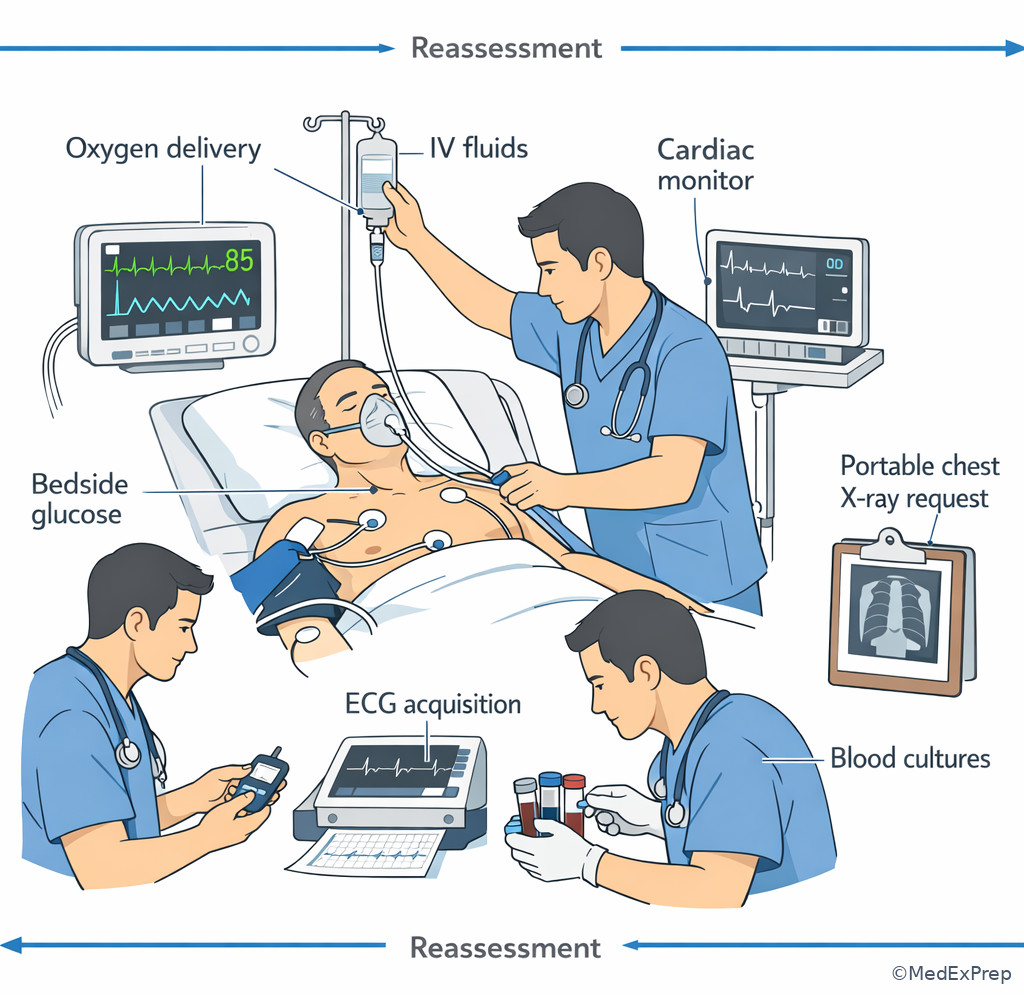
Examples of treatment-first logic: oxygen for hypoxemia, glucose for suspected severe hypoglycemia, epinephrine for anaphylaxis, aspirin/ECG/monitored care for suspected ACS, fluids and early antibiotics for septic shock, seizure control for status epilepticus. Examples of test-first logic in stable patients: CT pulmonary angiography in a stable possible PE, serial troponins in non-STEMI evaluation when no immediate reperfusion trigger exists, pregnancy test before teratogenic imaging or medication in reproductive-age patients, and CT head before anticoagulation in focal deficit with hemorrhage concern. The exam rewards the learner who knows when “confirm first” becomes unsafe delay.
Do not confuse “treat before every test” with good medicine. High-value triage means choosing the one action most likely to reduce harm. In stable patients, indiscriminate empiric therapy can create risk or obscure diagnosis. See Fig 4 for this parallel-processing logic.
Exam takeaway: When delay is dangerous, start stabilizing therapy and obtain the key test in parallel.
flowchart TD
A[Suspected serious condition] --> B{Would treatment delay risk harm?}
B -->|Yes| C[Treat immediately]
C --> D[Order targeted confirmation in parallel]
B -->|No| E[Get highest-yield test first]
D --> F[Reassess response and diagnosis]
E --> F Exam takeaway: Visualize treatment and testing happening together rather than as a rigid sequence.
B Worked example
A 63-year-old woman with rheumatoid arthritis on prednisone, type 2 diabetes, and recent urinary symptoms presents with fever, confusion, and weakness. Her daughter notes poor oral intake for two days. Temperature is 39.2°C, heart rate 122/min, blood pressure 86/48 mm Hg, respiratory rate 26/min. A fingerstick glucose is 188 mg/dL. She has mild suprapubic tenderness. The tempting wrong move is to focus on the glucose or wait for a definitive source study.
Identify task: immediate management in suspected septic shock. Extract key facts: fever, confusion, hypotension, tachycardia, likely infectious source, steroid use. Apply rule: early fluids, cultures, broad-spectrum antibiotics, and admission/ICU-level care should proceed rapidly; cultures are helpful but should not create harmful antibiotic delay. Eliminate distractors: CT abdomen first is tempting because the source is not fully proven; insulin adjustment is tempting because of diabetes; neither addresses shock. Verify: immediate sepsis bundle-style management with escalation is correct.
C Exam trap
Common wrong answer: Obtain comprehensive imaging to identify the infection source before starting antibiotics.
Why it is tempting: Definitive diagnosis feels more precise, and the patient has multiple possible sources.
Single clue that eliminates it: Hypotension with altered mental status indicates shock physiology, making treatment delay unsafe.
D Checkpoint
Question: A 45-year-old man with peanut allergy develops wheezing, diffuse urticaria, vomiting, and lightheadedness after eating dessert. Blood pressure is 82/46 mm Hg. Which is the most appropriate next step?
- Serum tryptase level before therapy
- Intramuscular epinephrine immediately
- Nebulized bronchodilator alone
- Observation until symptoms declare themselves further
Answer: B.
- A: Tempting because lab confirmation supports diagnosis; wrong because anaphylaxis is a clinical diagnosis and treatment cannot wait.
- B: Right because hypotension plus respiratory and cutaneous findings after exposure is anaphylaxis requiring immediate epinephrine.
- C: Tempting because wheezing invites an asthma frame; wrong because bronchodilator alone does not treat the systemic process.
- D: Tempting if symptoms seem transient; wrong because observation delays definitive life-saving treatment.
Clinician Action: Diagnose whether delay itself is dangerous. Order only the targeted tests that change immediate management. Treat immediately for likely reversible life threats such as anaphylaxis, hypoglycemia, shock, ACS, or status epilepticus. Refer/Escalate to monitored or higher-level care whenever the treatment-first condition carries risk of rapid deterioration.
1.1.1.6 Application: Disposition decisions—home, observe, admit, or transfer?
A Explanation
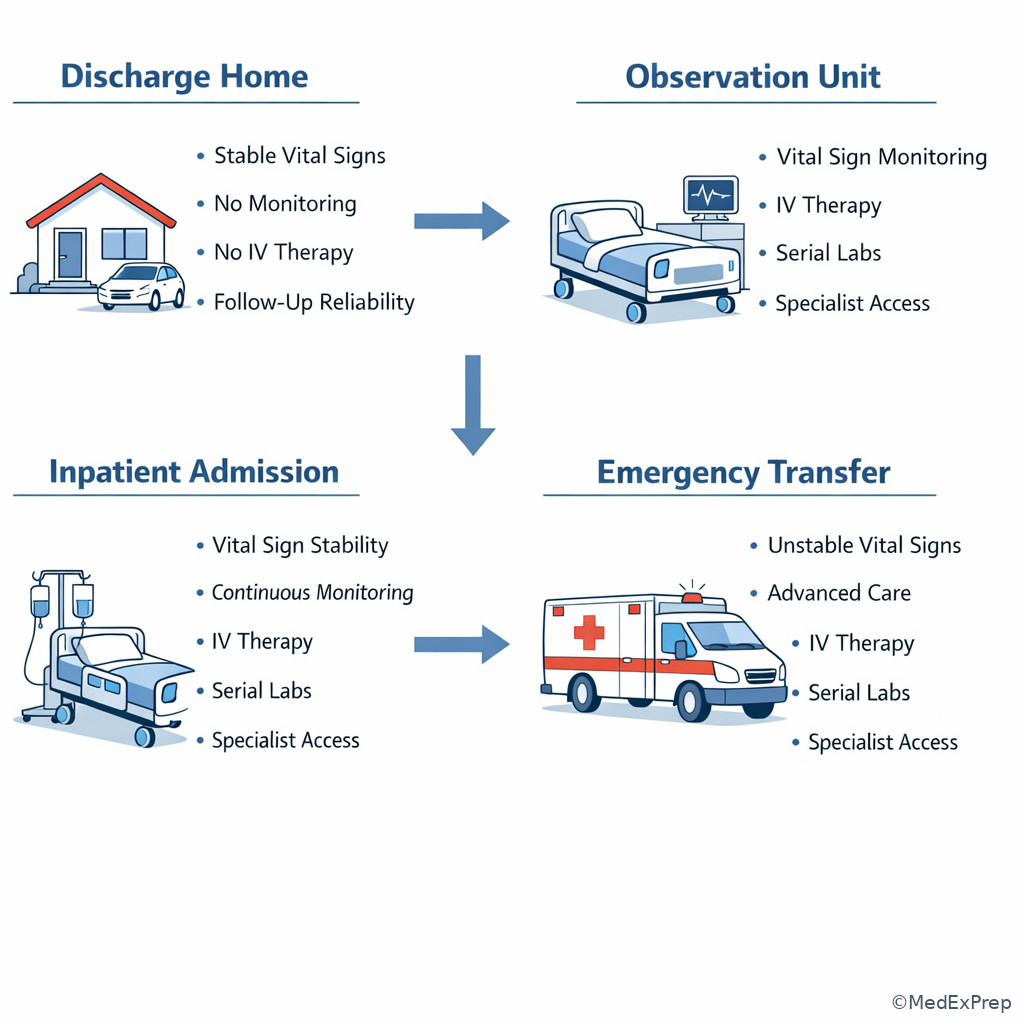
After initial stabilization and early testing, the exam often asks you to choose disposition. The conflict is between a technically improved patient and a safely dischargeable patient. The rule is that disposition depends on residual risk, required monitoring, access to follow-up, treatment intensity, and diagnostic uncertainty—not just temporary symptom improvement. WHY THIS IS TESTED: wrong answers frequently discharge patients who briefly improve but still carry unresolved high-risk diagnoses or unsafe follow-up conditions.
Safe discharge generally requires stable vital signs, low immediate risk, ability to take medications and fluids, reliable follow-up, a clear return-precaution plan, and no need for continuous monitoring or urgent procedures. Observation fits intermediate-risk patients needing serial exams, repeat biomarkers, hydration, or response assessment. Admission is favored when ongoing therapy, monitoring, organ dysfunction, or significant diagnostic uncertainty remains. Transfer is the right answer when the current setting cannot provide the needed level of care or specialist pathway.
Disposition is also where patient safety and professionalism enter. A patient who refuses recommended emergency care may still need capacity assessment, informed refusal documentation, and explicit risk counseling. For osteopathic reasoning, OMT can be considered only after acuity is resolved and no contraindication remains. It is never the substitute for admission-worthy management.
Common pitfall: Symptom improvement after analgesia, oxygen, nebulizer therapy, or fluids does not automatically downgrade acuity if the underlying diagnosis remains high risk.
Exam takeaway: Improvement in symptoms does not equal safe discharge if monitoring or high-risk uncertainty remains.
flowchart TD
A[After initial management] --> B{Vitals stable and low residual risk?}
B -->|Yes| C{Reliable follow-up and tolerating care?}
C -->|Yes| D[Discharge with precautions]
C -->|No| E[Observation or admission]
B -->|No| F[Admission or transfer]
F --> G{Higher level resource needed?}
G -->|Yes| H[Transfer or specialist pathway]
G -->|No| I[Inpatient monitored care] Exam takeaway: Match patient risk and resource need to the safest destination of care.
B Worked example
A 58-year-old man comes to the ED with melena and dizziness. He has cirrhosis, CAD, and osteoarthritis treated with NSAIDs. After fluids, his blood pressure improves from 88/54 to 108/66 mm Hg, and he says he feels “much better.” Hemoglobin returns at 8.1 g/dL. He asks to go home because he has a work meeting. A chronic knee effusion is noted on exam, which is irrelevant noise.
Identify task: choose disposition after partial response. Extract key facts: GI bleed, initial hypotension, cirrhosis, anemia, ongoing high-risk etiology. Apply rule: transient improvement after fluids does not make upper GI bleed with prior instability dischargeable. Eliminate distractors: discharge with PPI and next-day GI follow-up is tempting because vitals improved; observation may still understate risk if active significant bleed is suspected and inpatient/endoscopic management is needed. Verify: admission with GI-directed management is the correct disposition.
C Exam trap
Common wrong answer: Discharge after symptom improvement and normalizing blood pressure.
Why it is tempting: Learners overvalue the immediate response to fluids and undervalue the significance of the earlier hypotension.
Single clue that eliminates it: Melena plus initial shock physiology means the patient has already declared a potentially life-threatening bleed.
D Checkpoint
Question: A 22-year-old woman with no major history presents with vomiting after viral gastroenteritis. After oral rehydration in clinic, heart rate is 84/min, blood pressure 118/72 mm Hg, mucous membranes are moist, abdominal exam is benign, and she can tolerate liquids. Which is the most appropriate disposition?
- ICU admission
- Hospital admission for IV antibiotics
- Discharge with return precautions and follow-up guidance
- Emergency transfer for abdominal CT
Answer: C.
- A: Tempting if one equates any dehydration with high acuity; wrong because no instability or organ threat remains.
- B: Tempting because persistent vomiting may suggest serious infection; wrong because there is no evidence of bacterial sepsis or need for inpatient therapy.
- C: Right because she is rehydrated, stable, tolerating intake, and lacks red flags requiring observation or admission.
- D: Tempting because abdominal complaints sometimes hide surgical disease; wrong because the benign exam and clinical improvement lower that risk.
Clinician Action: Diagnose residual risk after initial management. Order serial exams, repeat labs, or monitoring only when they will clarify safe disposition. Treat symptoms enough to assess trajectory, not just comfort. Refer/Escalate if the patient needs specialist access, monitoring, IV therapy, procedures, or cannot safely follow up.
- The most common reason a patient who “looks better” still needs admission is unresolved high-risk diagnosis.
- True or False: Normalized vitals after fluids guarantee safe discharge. False.
- Name the 3 key discharge requirements: physiologic stability, low residual risk, reliable follow-up.
High-Yield Connection: This concept overlaps with Best Next Step Logic and Diagnostic Prioritization Under Uncertainty. On exam day, you must first choose the right care setting, then the right diagnostic move within that setting.
1.1.1.7 Integration: Common cross-system triage patterns and safe osteopathic reasoning
A Explanation
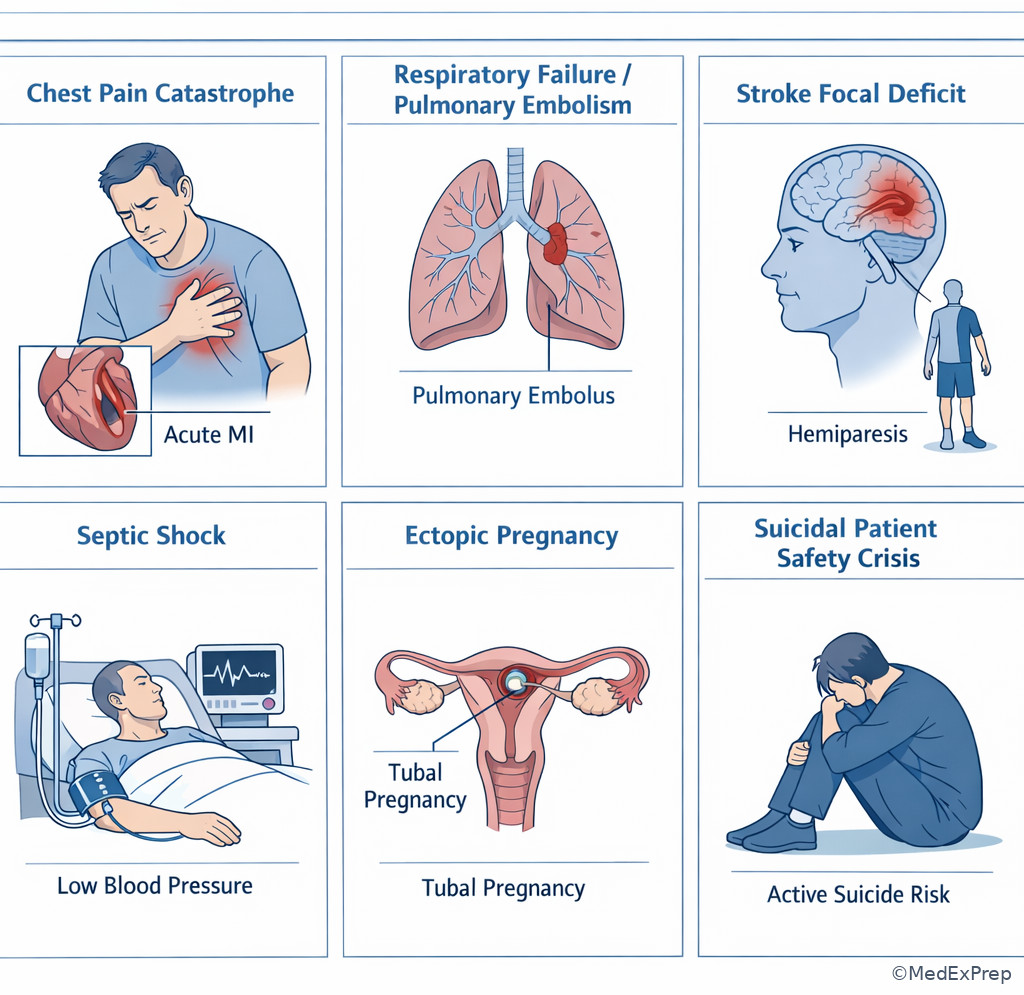
The final decision conflict is choosing among several dangerous possibilities while staying within physician-level scope. The resolving rule is to classify by syndrome first, then apply disease-specific next steps only after safety is secured. Major syndromes include chest pain syndromes, dyspnea syndromes, abdominal catastrophe syndromes, neurologic deficit syndromes, sepsis syndromes, psychiatric safety syndromes, and pregnancy-related emergencies. WHY THIS IS TESTED: COMLEX Level 3 often integrates systems, comorbidities, and safety obligations, forcing you to balance diagnosis, treatment, and disposition simultaneously.
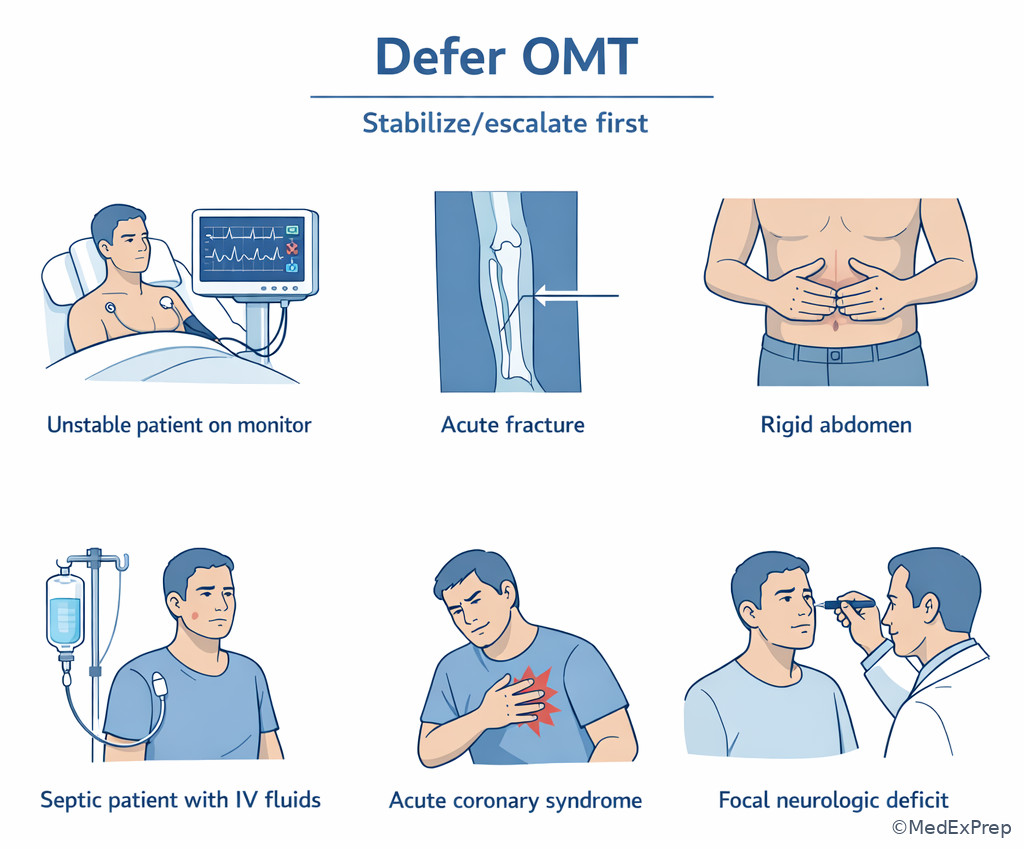
For osteopathic integration, the high-yield point is restraint. OMT may have a role later for recovery, pain modulation, or functional support, but not when acute instability, acute fracture, acute abdomen, severe infection, acute coronary syndrome, uncontrolled bleeding, or undifferentiated neurologic deficit is present. If an answer choice offers manipulative treatment in a stem with physiologic danger, it is usually a distractor. Safe osteopathic reasoning means recognizing when hands-on treatment is contraindicated and when referral or transfer is the correct physician action.
Cross-system triage also depends on pattern discrimination: chest pain with tearing radiation and pulse differential points toward dissection; dyspnea with unilateral leg swelling and pleuritic pain raises PE concern; fever with hypotension raises sepsis; suicidal ideation with a plan and means raises psychiatric emergency disposition; pregnancy plus syncope and pelvic pain raises ectopic pregnancy. See Fig 6 for a comparison framework that compresses these syndromes.
Memory anchor: For syndromic triage, remember “CHOPS”: Chest catastrophe, Hemorrhage/hemodynamics, Oxygen failure, Pregnancy emergency, Stroke/sepsis/suicide. If one is present, think escalation before fine-point diagnosis.
Exam takeaway: Grouping complaints into emergency syndromes helps choose the correct next action under uncertainty.
Exam takeaway: When instability, fracture, infection, or acute surgical pathology is present, OMT is not the next step.
B Worked example
A 34-year-old pregnant woman at approximately 7 weeks by last menstrual period presents with dizziness and pelvic pain. She also reports feeling “emotionally overwhelmed” since a recent breakup. She has a history of anxiety and chronic low back pain previously improved with OMT. Blood pressure is 90/56 mm Hg, pulse 118/min, and she has diffuse abdominal tenderness with guarding. The wrong answer becomes tempting because the stem includes anxiety and past benefit from OMT.
Identify task: choose the safest immediate action under cross-system noise. Extract key facts: early pregnancy, hypotension, tachycardia, pain, guarding. Apply rule: this is a pregnancy-related abdominal emergency until proven otherwise; mental health context and prior musculoskeletal treatment do not change triage. Eliminate distractors: anxiolysis, outpatient ultrasound, or OMT for back pain are all plausible in other patients but unsafe here. Verify: emergency obstetric/surgical evaluation and stabilization are required.
C Exam trap
Common wrong answer: Provide OMT for somatic dysfunction contributing to pain and anxiety.
Why it is tempting: COMLEX stems may include osteopathic cues, prior OMT benefit, and musculoskeletal findings to pull attention toward manipulation.
Single clue that eliminates it: Hypotension with guarding in a pregnant patient signals acute pathology, making OMT inappropriate until emergency causes are addressed.
D Checkpoint
Question: A 39-year-old man is brought by family for bizarre behavior. He has alcohol use disorder and depression. He is febrile to 38.8°C, disoriented, and tachycardic at 132/min. He says he wants to die, but he is also tremulous and diaphoretic. Which is the most appropriate next step?
- Outpatient psychiatric referral after safety contract
- Inpatient medical stabilization with urgent psychiatric safety management
- OMT for autonomic imbalance contributing to agitation
- Delay treatment until blood alcohol level returns
Answer: B.
- A: Tempting because suicidal ideation requires psychiatric planning; wrong because he is medically unstable and requires immediate monitored treatment.
- B: Right because delirium or withdrawal with suicidality requires physician-level medical stabilization and psychiatric safety management together.
- C: Tempting in an osteopathic exam context; wrong because acute instability and possible withdrawal/delirium contraindicate manipulative treatment as the next step.
- D: Tempting because toxicology data may help; wrong because management of unstable agitation/withdrawal cannot wait.
Clinician Action: Diagnose the syndrome category before overcommitting to a narrow diagnosis. Order targeted studies that support emergent decision-making. Treat life threats and safety threats first. Refer/Escalate appropriately across medical, surgical, obstetric, neurologic, or psychiatric pathways, and defer OMT when instability or contraindications are present.
Exam Traps & Differentiators
Common traps & distractors: The most common wrong answer is the one that would be correct if the patient were stable. The exam tests whether you notice the single instability clue that changes everything.
| Looks similar | Why it tempts you | Single discriminator | What to think instead |
|---|---|---|---|
| Panic attack vs PE or severe asthma | Anxiety, dyspnea, chest tightness overlap | Hypoxemia, unilateral leg findings, or severe wheeze/work of breathing | Respiratory/cardiopulmonary emergency until proven otherwise |
| GERD vs ACS | Epigastric burning and nausea can be atypical ischemia | Diaphoresis, exertional onset, hypotension, high-risk comorbidities | ACS pathway and monitored evaluation |
| UTI vs ectopic pregnancy | Pelvic discomfort and urinary findings may coexist | Pregnancy plus pain/bleeding or syncope | Ectopic-risk emergency evaluation |
| Migraine vs stroke | Headache, visual change, nausea overlap | New focal neurologic deficit or altered mental status | Acute neurologic emergency pathway |
| Simple gastroenteritis vs surgical abdomen | Nausea, vomiting, diffuse pain overlap | Peritoneal signs, shock, disproportionate pain | Acute abdomen escalation |
| Musculoskeletal pain vs aortic dissection | Back pain is common and often benign | Sudden tearing pain, pulse/BP differential, neurologic deficit | Aortic catastrophe pathway |
If the stem says “speaking in one-word sentences,” think impending respiratory failure, not simple anxiety.
If the stem says “felt better after fluids,” think reassess residual risk before discharge.
If the stem says “positive pregnancy test with pain or bleeding,” think ectopic pregnancy until ruled out.
If the stem says “confused, febrile, tachycardic, hypotensive,” think sepsis/shock pathway, not routine infection workup.
If the stem says “sudden chest pain to back with pulse asymmetry,” think dissection, not musculoskeletal pain.
If the stem says “osteopathic treatment option” in an unstable or undifferentiated emergency, think it is probably a distractor.
Cross-topic trap: In the upcoming lessons on Best Next Step Logic and Diagnostic Prioritization Under Uncertainty, some wrong answers will become more sophisticated: several may be correct in principle, but only one fits the current acuity level. Start that discrimination here.
Tables
| Situation | Best first action | What to avoid first |
|---|---|---|
| Severe hypoxemia with respiratory distress | Oxygen and airway support | Routine outpatient-style imaging sequence |
| Hypotension with suspected sepsis | Fluids, cultures, early antibiotics, monitored care | Delaying therapy for source confirmation |
| Anaphylaxis with wheeze and hypotension | IM epinephrine | Antihistamines alone |
| Pregnancy with pain and bleeding | Emergency ectopic evaluation | Assuming benign early pregnancy symptoms |
| Chest pain with hemodynamic concern | Monitored ACS/dissection/PE triage | Empiric GI treatment as sole response |
| Focal neurologic deficit | Stroke pathway activation | Attributing symptoms to migraine without urgent assessment |
| Disposition | Typical patient profile | Monitoring need | Exam phrase clues |
|---|---|---|---|
| Discharge home | Stable, low risk, tolerating intake, reliable follow-up | No continuous monitoring needed | Symptoms improved, benign exam, clear precautions |
| Observation | Intermediate risk, needs repeat exam/labs | Short-term reassessment needed | Serial troponins, repeat abdominal exam, rehydration response |
| Admission | Persistent risk, ongoing therapy, organ dysfunction | Ward or step-down monitoring | GI bleed, sepsis, uncontrolled pain with risk, persistent hypoxia |
| Transfer | Needs capability unavailable in current setting | Higher-acuity or specialty center | Stroke center, cath-capable hospital, trauma center, OB surgery |
| Differential category | Shared feature | Discriminating clue | Triage implication |
|---|---|---|---|
| ACS vs GERD | Chest/epigastric discomfort | Exertion, diaphoresis, instability | Emergency cardiac evaluation |
| PE vs panic attack | Dyspnea, chest tightness | Hypoxemia, pleuritic pain, VTE clues | Urgent cardiopulmonary workup |
| Stroke vs migraine | Headache and neurologic complaint | Objective new focal deficit | Stroke pathway |
| Ectopic pregnancy vs cystitis | Pelvic pain | Positive pregnancy test with bleeding/syncope | Emergency OB/GYN evaluation |
| Sepsis vs uncomplicated infection | Fever and source symptoms | Hypotension, confusion, organ dysfunction | Resuscitation and admission |
| Acute abdomen vs gastroenteritis | Abdominal pain and vomiting | Peritoneal signs or pain out of proportion | Surgical/emergency evaluation |
Algorithm / Approach
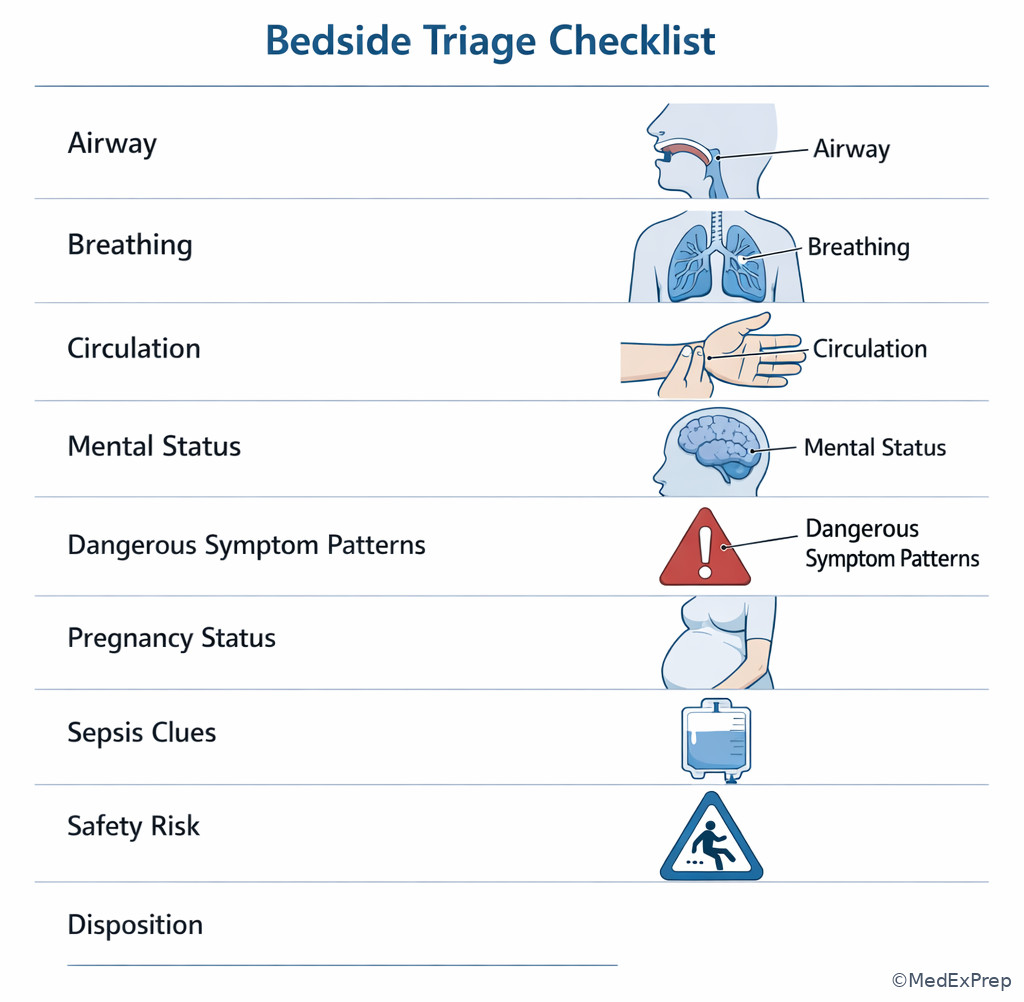
Exam takeaway: A repeatable bedside checklist reduces missed instability clues under time pressure.
Rapid Review
- Unstable physiology → outranks complaint label
- Hypoxemia + dyspnea → support airway/breathing before routine imaging
- Hypotension + infection clues → think septic shock pathway, not office infection care
- Pregnancy + pain/bleeding → ectopic until ruled out
- Transient improvement after fluids → does not erase prior high-risk state
- Focal neurologic deficit → stroke pathway, not migraine reassurance
- Chest pain + diaphoresis/exertion → cardiac risk despite atypical wording
- Panic-like symptoms + low oxygen saturation → reject primary psychiatric framing
- Peritoneal signs → surgical/emergency evaluation, not symptomatic discharge
- Need for monitoring → usually means not safe for home
- Transfer decision → based on missing resources, not on diagnostic certainty alone
- OMT in instability → defer until emergent pathology is addressed
- Best first test → only after asking whether a test delay would cause harm
Memory anchor: “\(SICK = Send/Support If Critical Clue Known\).” If you notice one major instability clue, move toward stabilization and escalation rather than polishing the differential.
Self-check quiz
1. A 30-year-old woman presents to clinic with dysuria and mild suprapubic discomfort. She has no fever, no flank pain, and normal vital signs. Which finding would most require immediate escalation rather than routine outpatient treatment?
- Positive leukocyte esterase on urinalysis
- Heart rate 118/min and blood pressure 86/52 mm Hg
- History of recurrent cystitis
- Mild nausea without vomiting
2. A 68-year-old man with diabetes and hypertension presents with “heartburn” after climbing stairs. Which additional clue most strongly shifts the case toward emergency cardiac evaluation?
- Relief after belching
- Epigastric burning after spicy food last week
- Diaphoresis and hypotension
- Remote history of reflux disease
3. A 57-year-old woman with COPD and anxiety presents with shortness of breath. She is using accessory muscles, oxygen saturation is 86% on room air, blood pressure is 138/82 mm Hg, and she is anxious after an argument with family. Which is the most appropriate next step?
- Administer supplemental oxygen and begin urgent respiratory stabilization
- Reassure her that the symptoms are most likely panic-related
- Schedule outpatient spirometry after discharge
- Obtain a complete metabolic panel before starting any therapy
4. A 25-year-old woman presents to urgent care with lower abdominal pain and light vaginal bleeding. She has mild asthma and IBS. Pulse is 112/min, blood pressure is 96/60 mm Hg, and a urine pregnancy test is positive. Which is the most appropriate next step?
- Start oral antibiotics for possible pelvic inflammatory disease and arrange follow-up
- Send her home with return precautions because bleeding is light
- Arrange urgent emergency evaluation for possible ectopic pregnancy
- Provide OMT for associated pelvic somatic dysfunction
5. A 72-year-old man with CAD and chronic kidney disease presents with melena and dizziness. Initial blood pressure is 88/50 mm Hg, but after IV fluids it improves to 108/64 mm Hg. Hemoglobin is 8.4 g/dL. Which disposition is most appropriate?
- Discharge with oral iron and outpatient follow-up
- Observation only if he feels better after a meal
- Hospital admission for ongoing management and monitoring
- Routine GI clinic referral in one week
6. A 44-year-old man presents with chest discomfort and dyspnea. He has obesity, tobacco use, and GERD. He is anxious and says this feels like prior panic episodes. Temperature is 37.0°C, pulse 124/min, blood pressure 118/76 mm Hg, respiratory rate 28/min, oxygen saturation 89% on room air. Which is the best initial management approach?
- Oral antacid therapy and discharge if pain improves
- Supplemental oxygen with urgent cardiopulmonary evaluation
- Benzodiazepine trial before further workup
- Outpatient stress testing within 72 hours
7. A 63-year-old woman with rheumatoid arthritis on prednisone presents with fever, confusion, and weakness. Blood pressure is 84/48 mm Hg, pulse 126/min, temperature is 39.1°C, and urinalysis shows nitrites. Which action is most appropriate?
- Obtain CT abdomen and pelvis before starting treatment
- Begin fluids, cultures, broad-spectrum antibiotics, and admission-level care
- Prescribe oral antibiotics and reassess the next day
- Delay management until the urine culture identifies the organism
8. A 36-year-old pregnant woman at 8 weeks presents with dizziness, abdominal pain, and scant vaginal bleeding. She has chronic low back pain previously improved with OMT and generalized anxiety disorder. Blood pressure is 92/54 mm Hg, pulse 120/min, and exam shows diffuse tenderness with guarding. Which option requires immediate clarification as unsafe?
- Emergency transfer for obstetric evaluation
- Stabilization while considering ruptured ectopic pregnancy
- Deferring OMT because acute instability is present
- Treating somatic dysfunction first with OMT to reduce pain and anxiety
Answer key
1. Correct answer: B. The mechanism is hemodynamic instability, which converts a routine urinary complaint into an emergency triage problem. Hypotension with marked tachycardia suggests shock, severe dehydration, sepsis, hemorrhage, or another serious process that requires immediate physician-level stabilization and higher-acuity evaluation rather than standard outpatient cystitis treatment. This is diagnosis-mechanism-treatment logic: recognize instability, identify that routine office management is unsafe, and escalate care. Sources: Harrison's Principles of Internal Medicine; UpToDate.
- A: Tempting because leukocyte esterase supports UTI; incorrect because it does not determine acuity. Single discriminating clue: UA positivity is less important than the shock-level vital signs.
- B: Tempting because it may seem attributable to pain or anxiety; correct because blood pressure 86/52 mm Hg with tachycardia is the clue that mandates immediate escalation. Single discriminating clue: hypotension.
- C: Tempting because recurrent cystitis makes outpatient treatment seem familiar; incorrect because prior history does not neutralize current instability. Single discriminating clue: unstable vitals override chronic pattern recognition.
- D: Tempting because nausea may suggest worsening infection; incorrect because mild nausea alone is not the acuity trigger. Single discriminating clue: nausea is nonspecific, hypotension is decisive.
2. Correct answer: C. Atypical ischemia is common in older patients and in patients with diabetes. Diaphoresis plus hypotension implies a high-risk cardiopulmonary process and should trigger emergency cardiac evaluation rather than a benign reflux frame. Mechanistically, autonomic symptoms and hemodynamic compromise point to myocardial ischemia or another serious vascular cause. Sources: AHA/ACC chest pain guidance; Harrison's Principles of Internal Medicine.
- A: Tempting because belching may accompany benign GI symptoms; incorrect because symptom relief patterns are not strong enough to downgrade risk when high-risk clues are present. Single discriminating clue: not as important as instability signs.
- B: Tempting because prior spicy-food burning sounds like GERD; incorrect because remote similarity does not explain exertional symptoms with risk features. Single discriminating clue: exertional context and instability matter more.
- C: Correct because diaphoresis and hypotension are the high-risk clues that push triage toward ACS/emergency evaluation. Single discriminating clue: hemodynamic compromise.
- D: Tempting because known reflux invites anchoring; incorrect because prior GERD does not exclude ACS. Single discriminating clue: current red-flag presentation overrides past diagnosis.
3. Correct answer: A. The patient has respiratory distress with hypoxemia and increased work of breathing, so immediate stabilization comes before reassurance or delayed testing. Mechanistically, inadequate oxygenation threatens organ function; treatment with supplemental oxygen and urgent respiratory support is indicated while further evaluation proceeds. Sources: UpToDate; Harrison's Principles of Internal Medicine.
- A: Tempting because it may feel “too early” before diagnosis is finalized; correct because low oxygen saturation and accessory muscle use require immediate respiratory support. Single discriminating clue: oxygen saturation 86%.
- B: Tempting because anxiety followed a family argument; incorrect because panic disorder does not explain objective hypoxemia. Single discriminating clue: abnormal oxygenation.
- C: Tempting because COPD management often includes spirometry; incorrect because outpatient testing ignores current instability. Single discriminating clue: acute respiratory distress requires treatment now.
- D: Tempting because laboratory data can refine differential; incorrect because labs should not delay treatment of hypoxemia. Single discriminating clue: the immediate threat is breathing failure, not a missing chemistry value.
4. Correct answer: C. Pregnancy plus abdominal pain and vaginal bleeding, especially with tachycardia and borderline hypotension, requires emergent evaluation for ectopic pregnancy. Pathophysiologically, ectopic implantation can rupture and cause life-threatening intraperitoneal hemorrhage. The correct physician-level move is urgent emergency referral/transfer and stabilization-oriented management. Sources: UpToDate; Harrison's Principles of Internal Medicine.
- A: Tempting because PID can cause pelvic pain and bleeding; incorrect because positive pregnancy with concerning vitals makes ectopic the discriminating emergency. Single discriminating clue: pregnancy test plus instability clues.
- B: Tempting because the bleeding is described as light; incorrect because blood volume loss can still be serious, and ectopic risk is not excluded by scant bleeding. Single discriminating clue: tachycardia with pregnancy-related pain.
- C: Correct because suspected ectopic pregnancy is the time-sensitive diagnosis that governs triage. Single discriminating clue: pregnancy + pain/bleeding.
- D: Tempting in an osteopathic exam context; incorrect because OMT is not the next step in a potentially unstable pregnancy emergency. Single discriminating clue: acute abdominal emergency signs contraindicate manipulative prioritization.
5. Correct answer: C. Melena with initial hypotension indicates significant GI bleeding, and transient hemodynamic improvement after fluids does not remove the need for inpatient monitoring and management. Mechanistically, the patient remains at risk for rebleeding, worsening anemia, and need for procedural therapy. Admission is the safest disposition. Sources: Harrison's Principles of Internal Medicine; UpToDate.
- A: Tempting because hemoglobin is not catastrophically low in isolation; incorrect because initial shock physiology and ongoing bleed risk make discharge unsafe. Single discriminating clue: prior hypotension.
- B: Tempting because observation sounds cautious; incorrect here because significant GI bleeding generally needs admission-level care, not comfort-based reassessment alone. Single discriminating clue: melena plus hemodynamic compromise.
- C: Correct because he needs ongoing monitoring, evaluation, and likely inpatient GI management. Single discriminating clue: unstable presentation despite temporary response.
- D: Tempting because specialty referral is ultimately needed; incorrect because delay to outpatient follow-up ignores acute risk. Single discriminating clue: current bleeding severity.
6. Correct answer: B. This is a high-acuity cardiopulmonary presentation because dyspnea, tachycardia, tachypnea, and oxygen saturation of 89% cannot be explained away by anxiety or GERD. Mechanistically, hypoxemia signals impaired gas exchange or ventilation and requires urgent support and evaluation for conditions such as PE, severe bronchospasm, or other cardiopulmonary disease. Sources: UpToDate; Harrison's Principles of Internal Medicine.
- A: Tempting because GERD is in the history and chest discomfort is present; incorrect because hypoxemia is not explained by reflux. Single discriminating clue: oxygen saturation 89%.
- B: Correct because supplemental oxygen and urgent cardiopulmonary evaluation address the immediate physiologic threat while preserving diagnostic momentum. Single discriminating clue: objective respiratory compromise.
- C: Tempting because the patient reports prior panic episodes; incorrect because panic should not be diagnosed before excluding serious medical causes in a hypoxemic patient. Single discriminating clue: low oxygen saturation.
- D: Tempting because chest discomfort may eventually need risk stratification; incorrect because outpatient testing is unsafe in a currently hypoxemic patient. Single discriminating clue: current instability.
7. Correct answer: B. Fever, confusion, tachycardia, and hypotension with a likely urinary source indicate sepsis with shock physiology. The correct mechanism-to-treatment logic is early recognition of systemic infection causing circulatory collapse, followed by prompt fluids, cultures, broad-spectrum antibiotics, and admission-level care. Time to treatment matters; diagnostic completeness must not delay stabilization. Sources: Harrison's Principles of Internal Medicine; UpToDate; Surviving Sepsis principles.
- A: Tempting because imaging may identify occult source or complication; incorrect because it delays necessary treatment in an unstable patient. Single discriminating clue: hypotension with altered mental status.
- B: Correct because it addresses the shock state while obtaining useful diagnostic data in parallel. Single discriminating clue: sepsis physiology.
- C: Tempting because the urine source seems straightforward; incorrect because oral outpatient treatment is unsafe in shock. Single discriminating clue: blood pressure 84/48 mm Hg.
- D: Tempting because culture-directed therapy is ideal later; incorrect because waiting for organism identification is dangerous in sepsis. Single discriminating clue: treatment delay worsens outcomes in shock.
8. Correct answer: D. In a pregnant patient with hypotension, tachycardia, abdominal pain, and guarding, ruptured ectopic pregnancy is a time-sensitive emergency. OMT is not simply optional here; it is unsafe as the first move because it delays stabilization and evaluation of a potentially hemorrhagic abdomen. The correct physician action is emergency transfer/stabilization and deferral of manipulation. Sources: UpToDate; Harrison's Principles of Internal Medicine; standard osteopathic contraindication principles.
- A: Tempting because it seems dramatic; correct-supportive rather than unsafe, since emergency transfer is appropriate. Single discriminating clue: hemodynamic instability in early pregnancy.
- B: Tempting because it is not yet proven to be ruptured ectopic; still appropriate because the syndrome warrants stabilization-oriented thinking. Single discriminating clue: guarding plus unstable vitals.
- C: Tempting because COMLEX may test osteopathic integration; this is appropriate, not unsafe, because acute instability is a reason to defer OMT. Single discriminating clue: contraindication in undifferentiated emergency abdomen.
- D: Tempting because prior OMT helped and pain/anxiety are present; incorrect and unsafe because manipulation does not treat the likely hemorrhagic emergency and delays definitive care. Single discriminating clue: hypotension with guarding.
Keep going with the full COMLEX Level 3 Prep Course (Level 3)
You just studied the way members do, in the same lesson interface. Full access unlocks every lesson, the question bank and flashcards for a full year.
One payment · 1 year of access · No auto-renewal