Transport, Storage, and Stability of Microbiology Specimens
A correctly collected microbiology specimen can become unsuitable before testing begins. The laboratory must preserve the target organism or analyte, prevent contamination and overgrowth, and recognize when handling conditions compromise interpretation. This lesson develops the specimen-to-test reasoning needed for the ASCP Board of Certification Microbiology (M) examination.
Estimated study time: 35-45 minutes, including worked examples and self-assessment.
PREREQS Specimen Acceptability Criteria; basic distinctions among bacterial culture, viral testing, molecular methods, and sterile versus nonsterile collection sites.
Blueprint mapping: Microbiology Foundations / Specimen Quality Principles; BAC_SPEC: transport; VIRO_TEST: specimen timing; LAB_LOGIC: stability limits; subject:microbiology-foundations. Official percentage weight is not specified in the supplied blueprint context.
OUTPUTS Given a specimen source, requested examination, elapsed collection time, transport device, and storage history, determine the safest and most defensible next laboratory action.
What you will learn
BAC_SPEC: transport - Match specimen type and suspected organism group to appropriate transport principles, including special requirements for anaerobes and fastidious bacteria.
LAB_LOGIC: stability limits - Explain how elapsed time, temperature, oxygen exposure, transport media, and packaging affect organism survival, relative recovery, and result validity.
VIRO_TEST: specimen timing - Distinguish collection timing from postcollection stability and identify when viral transport conditions must be verified against an assay-specific procedure.
BAC_SPEC: specimen quality - Differentiate acceptable delayed transport from a compromised specimen requiring investigation, qualification, recollection, or supervisory review under laboratory policy.
LAB_LOGIC: bench decision-making - Use a reproducible evidence-based workflow to resolve conflicting clues without relying on universal refrigeration or holding-time assumptions.
WHY
Why it matters
Preanalytic errors can change organism recovery: Microorganisms may die, increase in number, become obscured by competing flora, or lose distinguishing characteristics before culture or direct examination.
The correct holding condition is source-specific: Refrigeration may help control overgrowth in some routine specimens, whereas urgent bacterial cerebrospinal fluid examinations and blood cultures require different handling.
Transport and collection timing answer different questions: A perfectly transported viral specimen collected outside the useful detection window can still produce a misleading negative result.
Recognition protects result integrity: The technologist must investigate questionable transport conditions, document deviations, and follow established acceptance or escalation procedures rather than silently treating compromised material as reliable.
Key rule: Never choose transport temperature from organism category alone. First identify the specimen source and requested test, then determine the validated transport device, allowable delay, and holding condition.
KEY TERMS
Key Terms & Must-Know Facts
1.1.2.1 Essential vocabulary
Preanalytic phase
All processes before analysis, including patient preparation when relevant, collection, identification, transport, receipt, storage, and initial processing.
Transport medium
A formulated system intended to maintain specimen suitability during transfer; its performance depends on the organism, test, and validated use conditions.
Holding condition
The controlled environment in which a specimen remains before processing, defined by temperature, time, container, and other source-specific requirements.
Specimen stability
The period and conditions during which the specimen continues to support its intended laboratory examination within accepted performance limits.
Viability
The ability of a microorganism to remain alive and potentially recoverable by culture.
Overgrowth
Excessive multiplication of some organisms during a delay, potentially distorting their original proportions or obscuring clinically important organisms.
Fastidious organism
A microorganism requiring particular nutrients or environmental conditions and potentially vulnerable to unfavorable transport conditions.
Anaerobic transport
Transport designed to limit oxygen exposure and preserve organisms that require or prefer reduced-oxygen conditions.
Viral transport medium
A transport formulation used for designated viral specimens when compatible with the ordered testing method; specific collection systems are assay-dependent.
Collection-to-processing interval
The elapsed time between obtaining the specimen and beginning the relevant laboratory processing step.
False-negative result
A negative test result despite the target being present, potentially related to low target quantity, poor collection, degradation, method limitations, or unsuitable handling.
Compromised specimen
A sample whose collection, transport, temperature, packaging, timing, or identity may prevent reliable performance or interpretation of the requested test.
1.1.2.2 Must-know facts
Specimen source and test purpose determine transport priorities; identical containers are not interchangeable across all microbiology examinations.
Prompt delivery generally improves bacterial culture reliability by limiting overgrowth and loss of viability.
Unpreserved urine may develop altered bacterial counts during prolonged room-temperature storage; refrigerated or validated preservative systems may be appropriate for delays.
Blood culture bottles and specimens submitted urgently for routine bacterial cerebrospinal fluid examination are not managed by a blanket refrigeration rule.
Oxygen exposure may reduce recovery of clinically important anaerobes; properly collected deep aspirates or tissue are generally preferable to superficial swabs.
Fastidious organisms may be disproportionately lost during unfavorable transport, creating false reassurance from negative culture results.
Viral detection depends on both biologic collection timing and subsequent target stability under the assay's validated conditions.
Nucleic acid detection does not require a viable organism, but this does not eliminate transport requirements or guarantee a reliable negative result.
When transport conditions are uncertain, investigate and document the actual history before accepting, rejecting, qualifying, or requesting recollection according to laboratory policy.
Specimen or test
Primary transport priority
Important vulnerability
Bench-level implication
Routine urine culture
Prompt processing; approved refrigeration or preservative when delayed
In-vitro bacterial multiplication and altered quantitative counts
Verify collection time, preservation method, and validated holding limit.
Blood culture bottles
Prompt delivery and loading into the validated culture system
Delayed detection and nonvalidated storage conditions
Do not routinely refrigerate; follow instrument and laboratory instructions.
CSF for routine bacterial culture
Immediate prioritized delivery and examination
Loss of recovery of vulnerable pathogens and time-sensitive diagnosis
Do not routinely refrigerate the bacterial-culture portion; promptly communicate delay.
Deep tissue or aspirate for anaerobic culture
Appropriate oxygen-limiting transport and rapid delivery
Oxygen exposure and organism death
Check container suitability and amount of air exposure.
Stool for bacterial pathogen recovery
Prompt submission or validated enteric transport system
Loss of target recovery and changes in competing flora
Determine whether an appropriate stool transport medium is required.
Respiratory specimen for viral NAAT
Compatible collection device and assay-specific timing and storage
Target degradation, inhibitors, inappropriate medium, or low viral load
Use the validated assay collection and stability instructions.
Sputum for routine bacterial culture
Prompt evaluation and processing; approved cold holding if delayed
Oropharyngeal contamination and overgrowth
Evaluate specimen quality as well as transport conditions.
This reference table provides common principles, not universal specimen holding times. Validated laboratory procedures, test package instructions, and collection system specifications govern the precise limits.
CORE
Core content
1.1.2.3 1. Source-first transport triage: preserve what the test must detect
Foundational
A Explanation - Why specimen source outranks a universal transport rule
WHY THIS IS TESTED: Examination stems commonly present a plausible general handling practice, such as refrigerating every delayed specimen. The correct answer depends on whether that practice protects or damages the particular specimen and requested test.
The first decision conflict is choose the source-specific route versus choose one handling rule for all specimens. A urine specimen collected for quantitative culture, a blood culture bottle, an urgent CSF specimen, and a viral swab are not equivalent simply because all may contain microorganisms.
Begin by identifying the source and whether the specimen comes from an ordinarily sterile or nonsterile site. Identify the requested method: culture, direct examination, antigen test, or nucleic acid amplification. Next determine whether the laboratory must recover living microorganisms or detect a microbial component. Finally establish the actual device, collection time, receipt time, temperature, and transport history.
2. Identify the ordered method. Determine whether viability, cell integrity, antigen, or nucleic acid is required.
3. Verify collection system. Match container and medium to the validated test.
4. Verify exposure history. Review elapsed time, temperature, oxygen exposure, and leakage.
5. Apply specimen policy. Process, prioritize, investigate, or escalate as indicated.
The decision map below connects source identity to handling priorities. See Fig 1.
Fig 1. Source-first routing for microbiology specimens Exam takeaway: Specimen source and intended test determine the first transport decision.
graph TD
A[Specimen received] --> B{Source and test?}
B --> C[Urgent sterile-site bacterial workup]
B --> D[Routine nonsterile-site culture]
B --> E[Viral or molecular assay]
C --> F[Prioritize immediate processing]
D --> G[Check accepted holding system]
E --> H[Verify assay-specific device and timing]
F --> I[Document and proceed per policy]
G --> I
H --> I
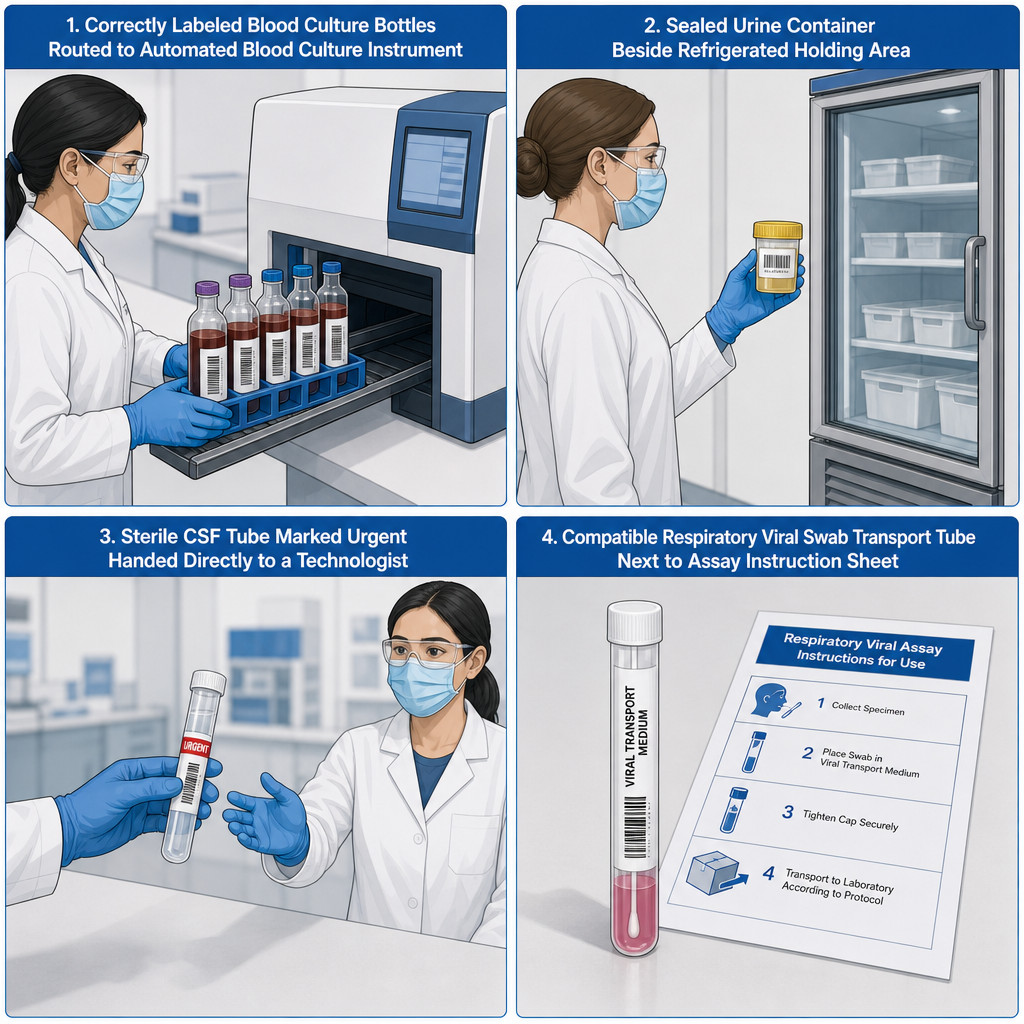
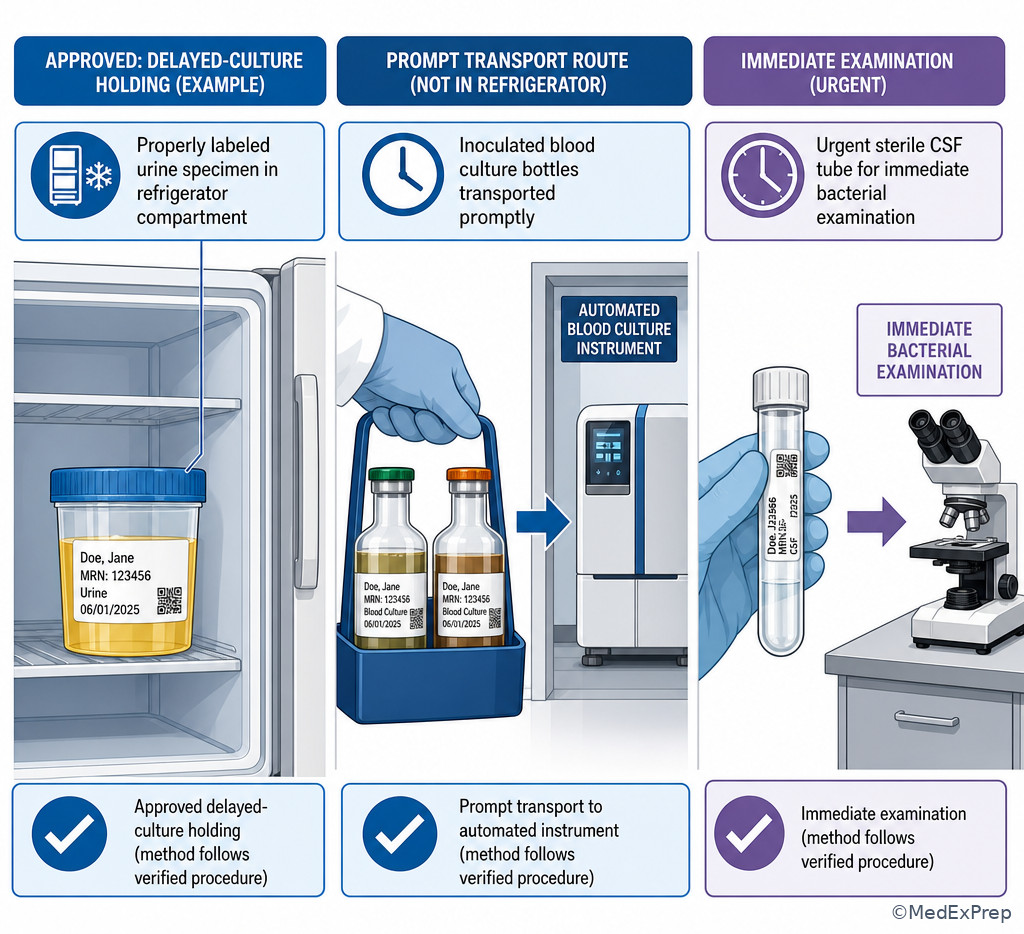
Fig 6. Specimen receipt priorities at a microbiology accessioning station Exam takeaway: Visually similar transport containers may require different workflows once the specimen source is identified.
B Worked example - Blood culture bottles beside a urine specimen
A 67-year-old hospitalized patient with diabetes mellitus and chronic kidney disease is evaluated for fever and dysuria. The laboratory receives two inoculated blood culture bottles and a urine specimen collected during the same clinical encounter. A screening urinalysis shows leukocyte esterase, and the requisition also notes a mildly elevated serum glucose. The courier asks whether all specimens should be refrigerated because the microbiology bench is busy.
Identify the task: Select the most appropriate transport or interim holding approach for two different specimen systems.
Extract key facts: The blood culture bottles are inoculated culture devices requiring the validated blood culture workflow; the urine is a separate quantitative culture specimen with its own stability requirements.
Apply the rule: Send blood culture bottles promptly for processing and loading according to the instrument protocol. If urine processing is delayed, use the laboratory-approved refrigeration or preservative system as appropriate.
Eliminate alternatives: The leukocyte esterase result does not justify identical temperature handling. Refrigerating blood culture bottles simply because refrigeration may preserve delayed urine is an incorrect generalization.
Verify: Confirm times and device integrity, route each specimen appropriately, and document any delay requiring action.
C Exam trap - The universal refrigerator answer
Common wrong answer: Refrigerate all microbiology specimens immediately.
Why it is tempting: Refrigeration often limits bacterial multiplication in certain specimens and is commonly associated with specimen preservation.
Single clue that eliminates it: The stem identifies an inoculated blood culture bottle, which must follow its validated culture-system handling requirements rather than an automatic refrigeration rule.
D Checkpoint MCQ
Question 1. A courier delivers a blood culture bottle and an unpreserved urine culture specimen shortly before a temporary processing delay. Which action is most appropriate?
A. Refrigerate both specimens to avoid bacterial growth.
B. Keep both at room temperature without checking holding limits.
C. Route the blood culture bottle for prompt loading and manage delayed urine using an approved holding method.
D. Freeze both specimens until routine processing resumes.
Correct answer: C.
A: Appealing because cold conditions may control urine overgrowth, but blood culture bottles do not follow that generalized rule.
B: Appealing because blood culture bottles are not routinely refrigerated, but it ignores the urine specimen's delay-related risks.
C: Correct because it treats each specimen according to its distinct laboratory system and stability requirements.
D: Appealing as a long-term preservation concept, but freezing is not an appropriate routine response for these culture specimens.
If you missed this: Review Source-first transport triage: preserve what the test must detect - focus on source-specific handling rather than universal temperature rules.
1.1.2.4 2. Temperature, transport media, and elapsed time
Foundational to application
A Explanation - Choose controlled holding without changing the organism population
WHY THIS IS TESTED: Questions about delayed transport often test whether a technologist recognizes that altered colony counts and microbial proportions can arise before the culture plate is inoculated.
The decision conflict is protect specimen stability versus apply a convenient but unvalidated temperature or transport medium. Temperature influences growth and survival, but the direction of the effect varies with specimen and organism. Cooling may reduce unwanted growth during a validated delay, while poorly selected conditions may reduce the recovery of sensitive organisms or invalidate other test methods.
Transport media are not interchangeable. An organism-maintaining transport system is not necessarily a growth medium. A preservative used for urine culture is not automatically acceptable for molecular testing or other culture methods. Likewise, a transport tube compatible with one molecular platform may not be validated for another.
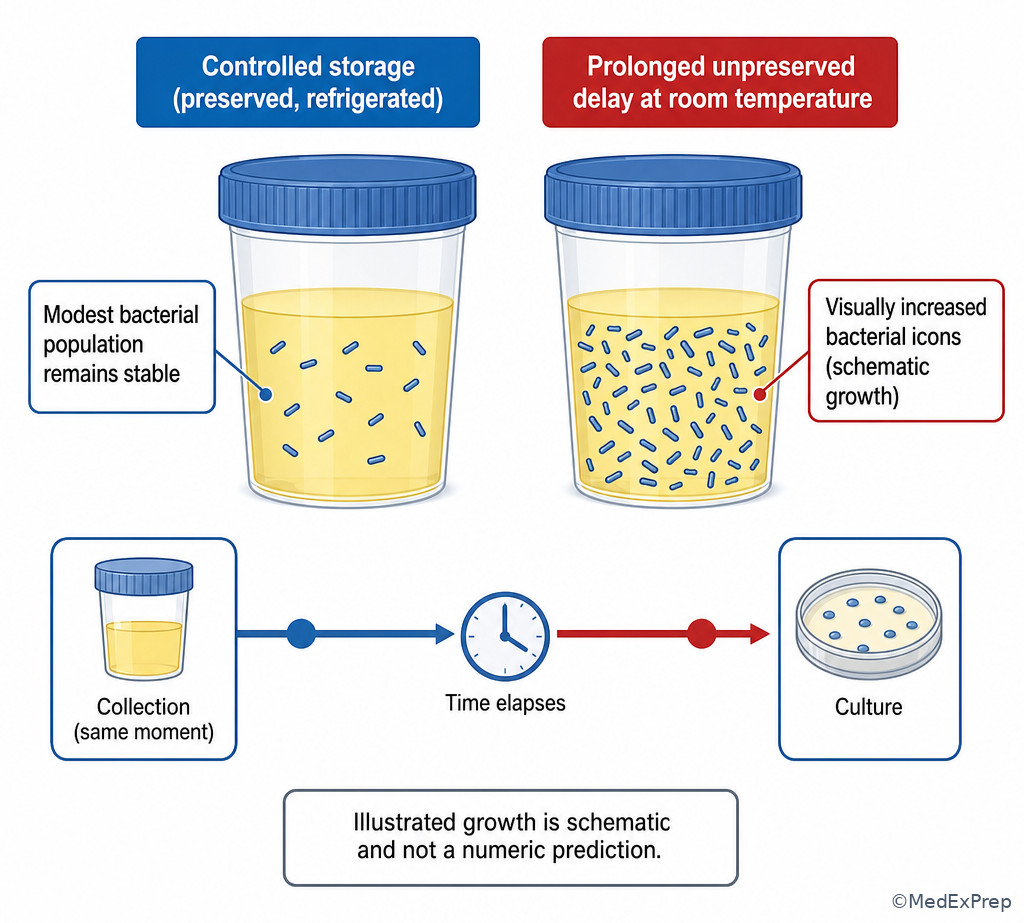
For unpreserved urine, prolonged room-temperature holding is especially important because organisms can multiply outside the patient, changing quantitative interpretation. Refrigeration or an appropriate validated preservative can reduce this risk, but only for the conditions and durations specified by the laboratory. For stool, the requested bacterial culture may require prompt submission or a suitable enteric transport system such as an approved Cary-Blair formulation when transport is delayed. Testing for other stool targets may have different requirements.
2. Identify device and contents. Distinguish plain containers from approved media or preservatives.
3. Confirm storage exposure. Establish actual temperature and any freezing or warming episodes.
4. Compare with validation. Apply specimen-specific holding instructions and allowable limits.
5. Protect interpretation. Document deviation and decide acceptance or escalation under policy.
The comparison visual distinguishes situations where cooling is commonly useful from important exceptions. See Fig 2.
Fig 2. Temperature decision comparison for routine microbiology specimens Exam takeaway: The presence of a transport delay does not by itself justify refrigeration.
Handling question
Choose when appropriate
Avoid or investigate
Routine urine cannot be cultured promptly
Approved refrigeration or validated preservative within specified limits
Prolonged unpreserved room-temperature storage with no stability assessment
Blood culture instrument temporarily unavailable
Manufacturer- and laboratory-directed interim handling with prompt escalation
Automatic refrigeration or freezing
Routine bacterial CSF workup is requested
Immediate prioritized processing using specified handling conditions
Routine refrigeration that could compromise bacterial recovery
Stool bacterial culture transport is delayed
Appropriate validated enteric transport system when required
Assuming a plain container and any temperature preserve all enteric pathogens equally
Specimen will be tested by NAAT
Assay-validated medium, temperature, and interval
Assuming molecular detection eliminates all storage restrictions
Urine preservation and quantitative culture accuracy
Exam takeaway: A growing population in the container can distort the original patient specimen's bacterial count.
B Worked example - Delayed urine culture with misleading urinalysis
A 59-year-old woman with recurrent urinary symptoms, hypertension, and type 2 diabetes provides an unpreserved clean-catch urine specimen. The container remains at room temperature for an extended period before arriving at the microbiology bench. A dipstick performed near collection was negative for nitrite, and the patient reports mild flank discomfort. The laboratory cannot verify that the specimen remained within its validated holding interval.
Identify the task: Determine whether the specimen is acceptable for reliable quantitative culture.
Extract key facts: The specimen is unpreserved, a substantial delay occurred, and the holding history does not meet a documented validated condition.
Apply the rule: Recognize potential bacterial multiplication and altered colony counts. Follow policy for acceptability investigation, qualification, or recollection; seek supervisory guidance where required.
Eliminate alternatives: A negative nitrite does not repair the transport deviation, and the patient's symptoms cannot validate a compromised specimen.
Verify: Check timestamps, recorded temperature, whether the specimen entered an approved preservation system, and any documented exception process.
C Exam trap - Letting a dipstick or preservative label replace stability evidence
Common wrong answer: Accept the delayed specimen because its nitrite result was negative or because the specimen is now refrigerated.
Why it is tempting: A familiar urinalysis result or a corrective storage action seems to provide reassurance.
Single clue that eliminates it: The specimen was held unpreserved beyond the validated interval; later cooling cannot reconstruct its original microbial population.
D Checkpoint MCQ
Question 2. An unpreserved urine specimen for quantitative culture has an undocumented prolonged room-temperature delay. What is the best next laboratory action?
A. Process automatically because colony counts are unaffected by transport.
B. Refrigerate the specimen now and assume its original condition has been restored.
C. Increase the inoculum volume to compensate for transport instability.
D. Check the validated stability criteria and follow the applicable acceptability or recollection procedure.
Correct answer: D.
A: Tempting because culture can still yield colonies, but growth in the container may have changed their quantitative significance.
B: Tempting because cooling limits further growth in approved circumstances, but it cannot undo prior population changes.
C: Tempting as a technical correction, but changing the inoculum does not restore specimen validity and may violate the validated method.
D: Correct because documented transport conditions must be judged against specimen-specific laboratory limits.
If you missed this: Review Temperature, transport media, and elapsed time - focus on why late preservation cannot reverse earlier changes in microbial burden.
Quick Recall:
Complete: A delayed unpreserved urine culture is especially vulnerable to altered ______ counts. Answer: Quantitative bacterial.
True or false: A transport medium validated for one assay is necessarily appropriate for another assay. Answer: False.
One-line rule: What determines a holding limit? Answer: The specimen, collection device, target, method, and validated laboratory conditions.
1.1.2.5 3. Fastidious organisms, anaerobes, and urgent sterile-site specimens
Application
A Explanation - Preserve vulnerable organisms without sacrificing specimen quality
WHY THIS IS TESTED: Culture interpretation can be misleading when a fragile pathogen is lost while more tolerant microorganisms remain recoverable. Examination questions require recognition of the appropriate initial collection and transport pathway rather than an attempt to compensate through downstream incubation.
The decision conflict is preserve vulnerable target viability versus prioritize convenience or an inappropriate specimen device. Fastidious organisms may require prompt processing and compatible transport conditions. Anaerobes may be damaged by oxygen exposure. Sterile-site specimens often require rapid laboratory attention because even a small loss of recovery may change the interpretation of a high-significance specimen.
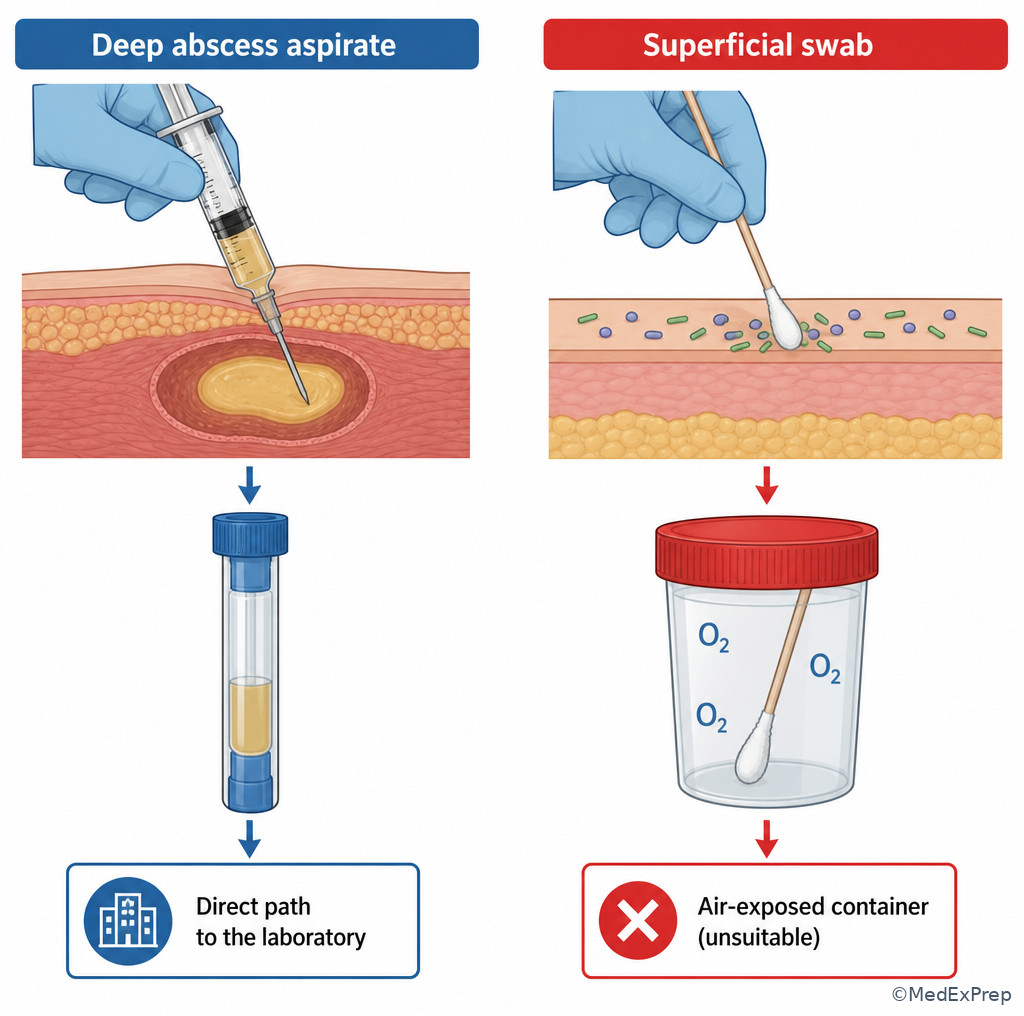
For suspected anaerobic infection, a deep aspirate or tissue obtained appropriately and transported in a validated oxygen-limiting system is generally preferable to a superficial swab. A superficial specimen may additionally contain organisms from adjacent skin or mucosa, making it difficult to attribute recovery to the infection site. Avoid opening anaerobic containers unnecessarily. Follow established biosafety precautions when handling all potentially infectious material.
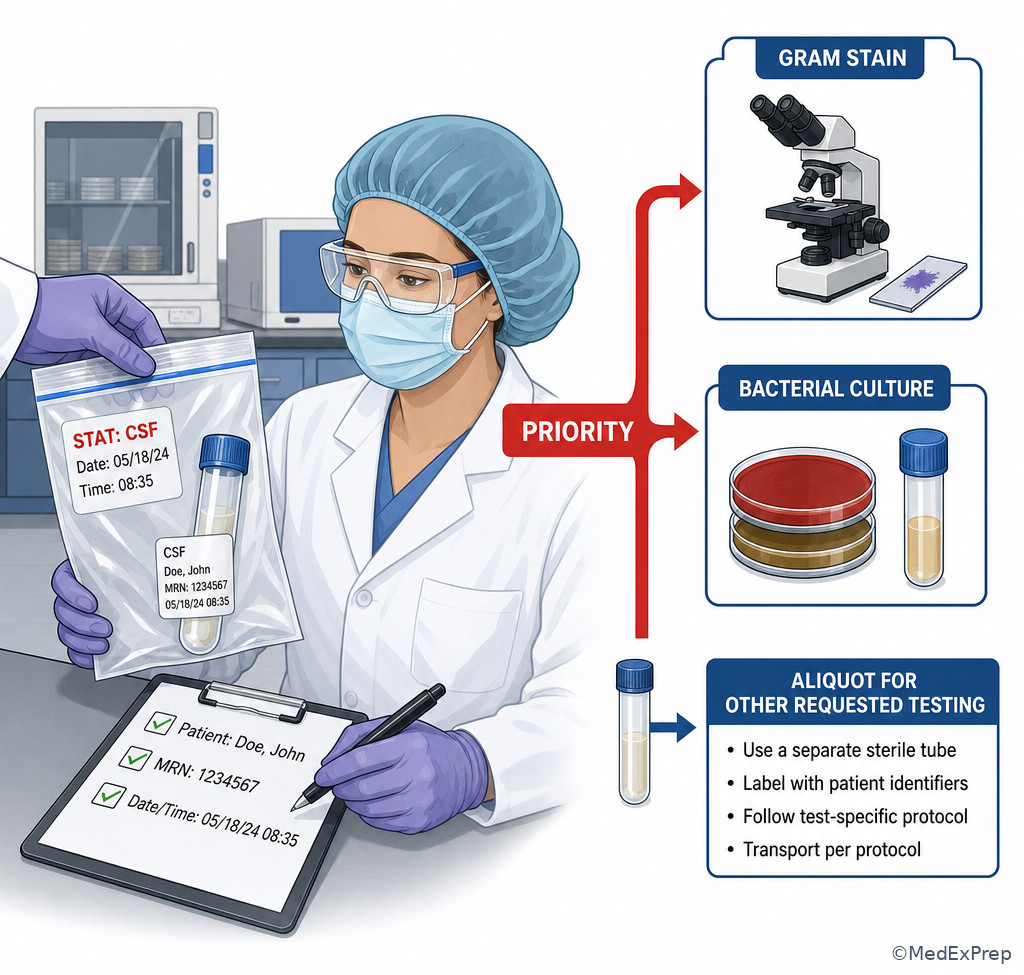
CSF submitted for routine bacterial meningitis workup is a priority specimen. Immediate communication and processing help preserve the opportunity to recover vulnerable bacteria. Routine refrigeration of the bacterial-culture portion should not be substituted for urgent processing. However, if separate aliquots are requested for viral molecular or other testing, their storage instructions may differ; the label CSF alone does not define every test's handling condition.
1. Recognize high-risk sources. Identify CSF, deep aspirates, and other urgent sterile-site submissions.
2. Determine the organism requirement. Assess fastidious recovery or anaerobic oxygen sensitivity.
3. Examine collection suitability. Distinguish deep tissue or aspirate from potentially contaminated surface material.
4. Protect immediate viability. Prioritize delivery, temperature suitability, and appropriate oxygen-limiting systems.
5. Escalate significant deviation. Apply rejection or exceptional-processing policy and communicate limitations.
Use the differential recovery map in Fig 3 to avoid confusing a surviving background organism with proof that a vulnerable target was absent.
Fig 3. Vulnerable-organism transport decision tree Exam takeaway: Appropriate collection depth and oxygen exposure must be considered before interpreting a negative anaerobic culture.
graph TD
A[Suspected vulnerable pathogen] --> B{Specimen context?}
B --> C[Deep aspirate or tissue for anaerobes]
B --> D[CSF for bacterial examination]
B --> E[Other fastidious culture]
C --> F[Verify oxygen-limiting system and prompt transfer]
D --> G[Prioritize urgent processing without routine refrigeration]
E --> H[Use compatible transport and minimize delay]
F --> I[Assess integrity and deviations]
G --> I
H --> I
Deep abscess aspirate versus superficial swab
Exam takeaway: Sampling depth and oxygen protection influence whether anaerobic culture reflects the suspected infection site.
Urgent bacterial cerebrospinal fluid processing pathway
Exam takeaway: A sterile-site specimen requiring rapid bacterial recovery should be routed immediately rather than held under a routine refrigeration assumption.
B Worked example - Anaerobic request with the wrong collection device
A 72-year-old man with peripheral vascular disease, diabetes mellitus, and a chronic lower-extremity wound undergoes evaluation for a suspected deep infection. The microbiology laboratory receives a superficial wound swab in an ordinary aerobic transport tube, labeled for anaerobic culture. The accompanying blood count shows mild leukocytosis, and a previous superficial culture reported mixed skin organisms. The collection note indicates that the swab remained exposed to room air during transport.
Identify the task: Decide whether the specimen is suitable for reliable anaerobic recovery.
Extract key facts: This is a superficial swab, not a deep aspirate or tissue; its transport system was not designed to minimize oxygen exposure.
Apply the rule: Evaluate the specimen against the laboratory's anaerobic culture acceptance criteria. If unsuitable, follow the rejection or exception policy and communicate the need for an appropriate specimen through authorized channels.
Eliminate alternatives: Leukocytosis does not establish specimen adequacy. A previous culture showing skin flora does not prove that the current superficial swab represents the deep site.
Verify: Check specimen designation, actual collection site, transport medium, oxygen exposure, and applicable documented exceptions before final disposition.
C Exam trap - Negative anaerobic culture means no anaerobic pathogen
Common wrong answer: Treat an anaerobic culture as definitive if the specimen yielded no anaerobes despite obvious exposure to oxygen.
Why it is tempting: A negative culture can look like a conclusive organism-identification result, especially when aerobic organisms are recovered.
Single clue that eliminates it: The sample was collected or transported without suitable anaerobic protection, limiting confidence in a negative result.
D Checkpoint MCQ
Question 3. A deep tissue infection is suspected, but the laboratory receives a superficial swab in a standard aerobic transport device with an anaerobic culture request. Which response is most appropriate?
A. Proceed as a valid deep anaerobic specimen because the request specifies anaerobic culture.
B. Check the anaerobic specimen acceptance policy and seek an appropriately collected specimen when required.
C. Place the swab into an anaerobic chamber and assume the earlier oxygen exposure has been reversed.
D. Perform an aerobic culture and interpret it as equivalent to the requested anaerobic investigation.
Correct answer: B.
A: Tempting because the test order is explicit, but a test order cannot correct unsuitable collection or transport.
B: Correct because collection depth, device suitability, and oxygen exposure determine reliable anaerobic recovery.
C: Tempting because an anaerobic chamber provides low oxygen conditions, but it cannot restore organisms already killed by exposure.
D: Tempting because aerobic culture may produce organisms, but it cannot be substituted for the requested anaerobic workup without authorization.
If you missed this: Review Fastidious organisms, anaerobes, and urgent sterile-site specimens - focus on the combined importance of sampling depth and oxygen-limiting transport.
1.1.2.6 4. Viral specimen timing and molecular stability
Application to integration
A Explanation - Separate biologic timing from postcollection preservation
WHY THIS IS TESTED: Viral and molecular testing questions frequently offer two plausible explanations for a negative result: collection when target abundance was low or improper handling after an adequate collection. These are different sources of error and require different corrective reasoning.
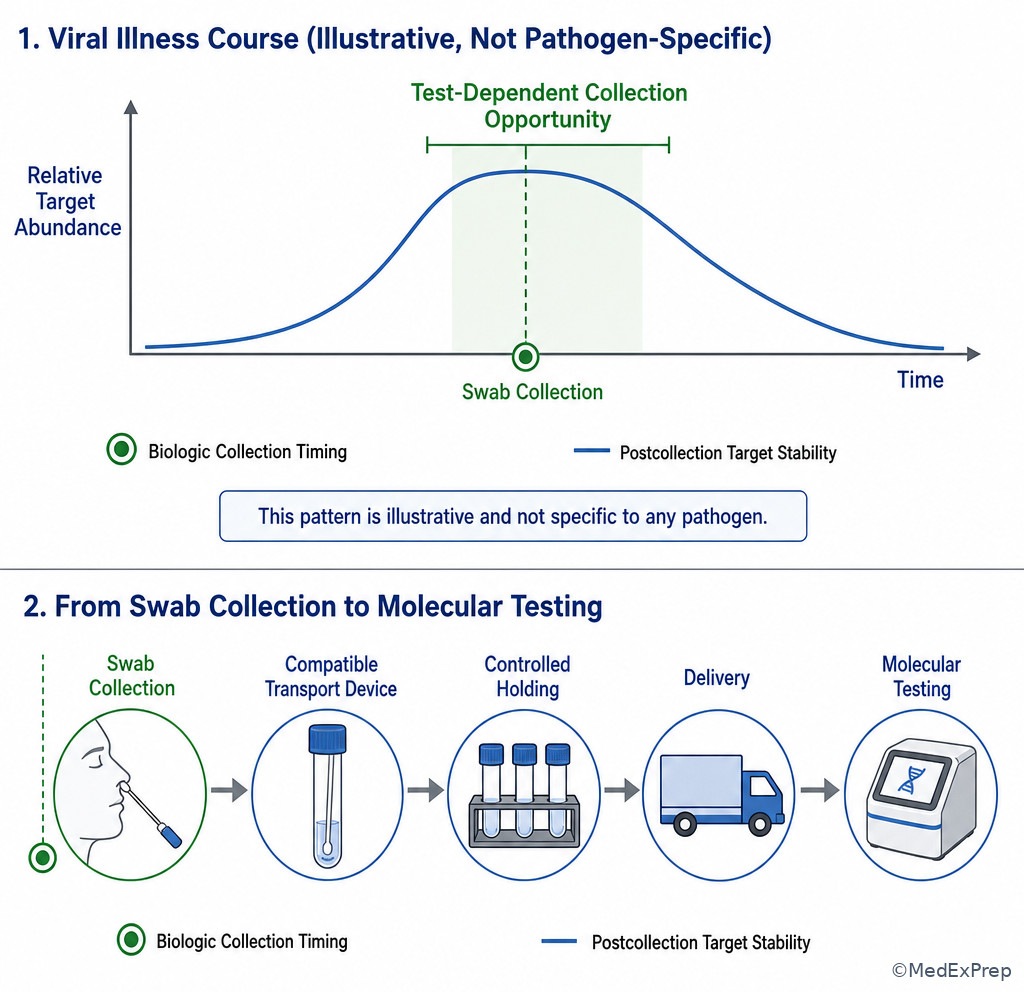
The decision conflict is choose a biologically appropriate collection window versus assume a sensitive assay compensates for poor collection or transport. Detectability depends on the organism, anatomic source, stage of illness, specimen quality, and analytical method. Many acute viral infections are more readily detected at certain phases of illness, but the optimal window varies by pathogen and specimen.
After collection, viral specimens must remain within the conditions validated for the requested examination. Cell culture, where used, generally depends on preservation of infectious virus and living cell-culture systems. Antigen assays depend on suitable antigen preservation. NAATs detect specified nucleic acid targets and do not necessarily require infectious virus, but nucleic acid degradation, inhibitors, inappropriate collection media, or insufficient target material can still cause invalid or falsely negative findings.
No single transport temperature, freezing rule, or universal viral medium should be imposed across platforms. The laboratory must check the assay-specific device, storage conditions, transport window, and acceptance criteria, including whether a dry swab or a particular liquid medium is supported. Do not substitute saline, viral transport medium, or other formulations merely because another platform accepts them.
1. Establish collection timing. Relate collection to the indicated diagnostic window when that information is relevant.
2. Check anatomic source. Verify the specimen type is approved for the requested assay.
3. Check collection system. Confirm swab material and medium compatibility.
4. Verify postcollection stability. Compare time and temperature history with assay instructions.
5. Interpret limitations. Separate invalid handling from a valid negative result and escalate if necessary.
The two-stage timing illustration distinguishes collection opportunity from transport preservation. See Fig 4.
Fig 4. Two independent timing windows in viral diagnosis Exam takeaway: Adequate transport cannot compensate for specimen collection at a biologically unsuitable time or site.
Testing method
Material principally detected or recovered
Handling concern
Interpretive limitation
Viral culture
Recoverable infectious virus
Loss of infectivity during unsuitable handling
Negative culture may reflect low viability rather than absence of viral material.
Viral antigen test
Specified viral antigen
Antigen stability and adequate sampling
Low antigen quantity or poor collection can decrease detection.
Viral NAAT
Specified viral nucleic acid
Nucleic acid stability, inhibitors, and media compatibility
Detection may persist without viable virus; negative results do not automatically exclude infection.
Serologic method
Host antibody or other specified immunologic target
Appropriate serum handling and collection stage
Early collection or antibody kinetics may limit interpretation.
B Worked example - A compatible-looking but unvalidated viral swab
A 34-year-old patient with asthma and obesity presents during an acute respiratory illness. The laboratory receives a respiratory swab ordered for a validated viral NAAT. The patient also has a normal peripheral leukocyte count, and the clinician's note reports that symptoms began recently. The sample is delivered promptly in a tube containing a liquid medium that resembles the laboratory's routine viral transport medium, but the product is not listed as compatible with the ordered assay.
Identify the task: Determine whether prompt arrival and appropriate symptom timing are sufficient to accept the specimen.
Extract key facts: Timing may be clinically appropriate, but the collection device or medium is not confirmed as validated for this method.
Apply the rule: Verify the exact collection system against the assay instructions and established laboratory acceptance criteria before analysis. Follow the authorized exception, rejection, or recollection process when incompatible.
Eliminate alternatives: A normal leukocyte count does not establish the presence or absence of the viral target. Prompt transport cannot make an unvalidated medium analytically compatible.
Verify: Review product identification, swab type, transport medium, assay compatibility, and any approved alternative specimen procedures.
C Exam trap - Molecular testing eliminates transport restrictions
Common wrong answer: Perform viral NAAT on any swab in any liquid because PCR does not require a living virus.
Why it is tempting: NAAT is capable of detecting nonviable viral material.
Single clue that eliminates it: The medium is not validated for the ordered assay, and compatibility is required independently of viral viability.
D Checkpoint MCQ
Question 4. A respiratory swab arrives promptly for viral NAAT in a transport medium not listed among the assay's accepted systems. Which interpretation is best?
A. The specimen is automatically acceptable because NAAT detects nucleic acid.
B. The specimen is acceptable if the patient has typical viral symptoms.
C. Freezing the specimen immediately makes the collection system compatible.
D. Device and medium compatibility must be verified before testing, with nonconforming specimens handled according to policy.
Correct answer: D.
A: Tempting because NAAT does not depend on viable virus, but collection chemistry and assay validation still matter.
B: Tempting because clinical suspicion supports testing, but symptoms do not establish analytical suitability.
C: Tempting because freezing sometimes preserves selected analytes, but it cannot establish compatibility for an unvalidated medium.
D: Correct because specimen acceptance must match assay-specific collection and transport requirements.
If you missed this: Review Viral specimen timing and molecular stability - focus on the distinction between target viability and validated collection-system compatibility.
Complete: An appropriate viral specimen requires the correct source, collection timing, and validated ______ system. Answer: Collection and transport.
One-line distinction: What differs between collection timing and storage stability? Answer: Collection timing reflects target availability in the patient; stability reflects preservation after collection.
1.1.2.7 5. Delayed or compromised specimens: interpretation, recollection, and escalation
Integration
A Explanation - Decide whether the result will still answer the laboratory question
WHY THIS IS TESTED: Integrated laboratory cases commonly contain competing facts: a valuable specimen that is difficult to recollect, a negative preliminary test, prolonged transit, and a request for urgent results. The most appropriate bench response balances diagnostic urgency with validated specimen acceptance and accurate reporting.
The decision conflict is process under an authorized exception versus reject or request recollection when validity cannot be supported. Transport deviations are not all equivalent. They may cause overgrowth, organism loss, target degradation, contamination, or a combination. The laboratory should establish what happened before deciding whether additional testing is useful.
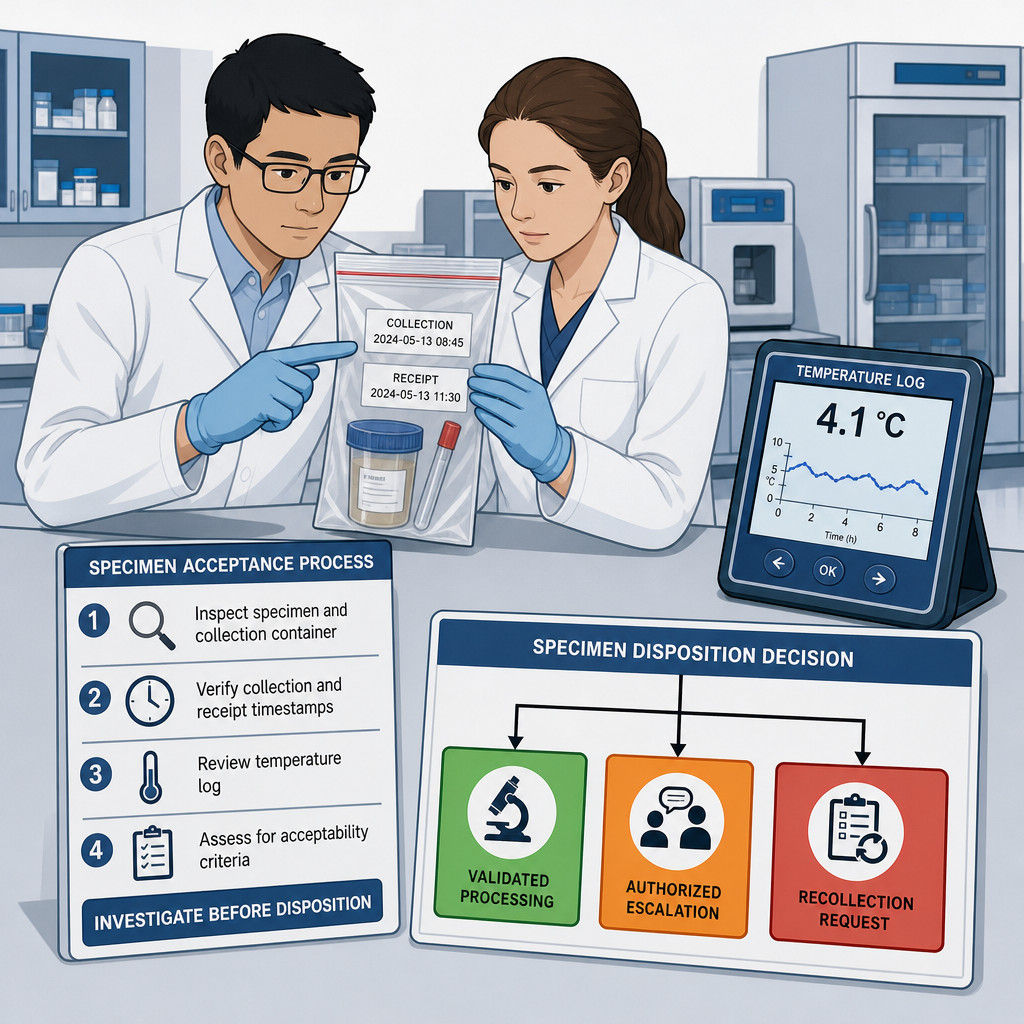
Use a structured investigation: confirm patient and specimen identifiers, collection time, receipt time, actual transport device, sealing and leakage, temperature history, requested test, and source-specific stability criteria. Determine whether the issue affects only one requested examination or multiple ordered tests. A compromised culture specimen may still be suitable for a separately validated method, but the technologist must not independently substitute methods or authorize nonstandard testing.
A recollection recommendation is especially important when an unreliable result could be interpreted as excluding a high-significance pathogen or when quantitative results have likely been altered. Some specimens are difficult or impossible to obtain again. Such circumstances require prompt communication and an authorized laboratory decision, not automatic destruction or unqualified release.
1. Detect deviation. Identify time, temperature, medium, labeling, leakage, or collection problems.
3. Check validated rules. Compare actual handling with the laboratory's written acceptance requirements.
4. Choose authorized disposition. Accept, prioritize, qualify, reject, or escalate without exceeding technologist authority.
5. Document and communicate. Record deviations and notify the appropriate personnel before misleading results are released.
The operational decision map in Fig 5 emphasizes investigation before specimen disposition.
Fig 5. Compromised-specimen decision and escalation pathway Exam takeaway: An undocumented exception or a convenient result cannot replace validated acceptability criteria.
graph TD
A[Potential transport deviation] --> B[Confirm actual specimen history]
B --> C{Within validated limits?}
C -->|Yes| D[Proceed with routine processing]
C -->|No or unknown| E[Evaluate target and consequence]
E --> F{Authorized exception?}
F -->|Yes| G[Document and process as directed]
F -->|No or uncertain| H[Escalate and follow recollection or rejection policy]
D --> I[Verify and report appropriately]
G --> I
H --> I
Specimen transport deviation audit at the laboratory bench
Exam takeaway: Actual timestamps, device integrity, and documented holding conditions guide the acceptance decision.
Observed problem
Possible microbiologic effect
Likely interpretive risk
Appropriate laboratory response
Extended unpreserved room-temperature urine delay
Growth of organisms after collection
Distorted original colony counts or apparent mixed growth
Check validated stability and recollection policy.
Oxygen exposure during anaerobic specimen transport
Loss of oxygen-sensitive organisms
False-negative or incomplete anaerobic recovery
Review specimen suitability and communicate limitations.
Delay in urgent bacterial CSF delivery
Reduced recovery of vulnerable bacteria
Potential false-negative bacterial culture
Prioritize processing and escalate the delay.
Wrong molecular specimen medium
Target instability or assay incompatibility
Invalid result or altered assay sensitivity
Check the exact platform's validated collection system.
Leaking or externally contaminated container
Contamination, sample loss, and exposure hazard
Unreliable result and compromised personnel safety
Use appropriate biosafety precautions and rejection or exception procedures.
Unverified collection time
Unknown exposure interval
Unable to establish stability compliance
Investigate and document before applying acceptance policy.
B Worked example - Delayed sterile-site specimen with competing priorities
A 46-year-old patient with immunosuppression, chronic kidney disease, and a recent history of antimicrobial exposure undergoes a procedure yielding a small volume of normally sterile-site fluid for bacterial culture. The sample arrives after an unexpected courier delay. The container is sealed and clearly labeled, but the holding temperature was not recorded. A preliminary direct smear is negative for visible bacteria, and the ordering team requests an urgent report.
Identify the task: Decide how to address uncertain specimen stability while preserving the opportunity for clinically important testing.
Extract key facts: The source is ordinarily sterile, the volume may be difficult to replace, the transport history is incomplete, and the smear is negative.
Apply the rule: Prioritize communication with the responsible laboratory personnel, investigate transport history, and follow the laboratory's policy for urgent compromised sterile-site specimens. Processing under an authorized exception may be considered according to policy; the technologist must not unilaterally guarantee result validity.
Eliminate alternatives: A negative smear does not establish culture negativity. Urgency does not authorize ignoring validated quality requirements. Automatic rejection without assessing the unique collection circumstance may also be inappropriate.
Verify: Confirm the source, container, time history, ordered tests, documented disposition, and any required reporting qualification.
C Exam trap - Let a negative preliminary result excuse a deviation
Common wrong answer: Release a routine negative interpretation because the Gram stain or other preliminary examination is negative.
Why it is tempting: A negative microscopic examination can appear to corroborate a negative culture, particularly when the specimen arrived intact.
Single clue that eliminates it: The transport deviation threatens target recovery, and a negative direct examination does not establish adequate culture stability.
D Checkpoint MCQ
Question 5. An urgent normally sterile-site specimen arrives in an intact container after an undocumented delay. The Gram stain shows no visible organisms. Which action is best?
A. Release a negative culture report immediately because the direct smear is negative.
B. Discard the specimen automatically because the exact transport interval is unknown.
C. Investigate the delay and follow documented laboratory procedures for prioritized processing, exceptional acceptance, or recollection with appropriate escalation.
D. Transfer the material into another medium without authorization and report the specimen as uncompromised.
Correct answer: C.
A: Tempting because the preliminary finding seems reassuring, but smear sensitivity and specimen viability are separate issues.
B: Tempting because strict rejection protects quality, but high-value specimens may have authorized exception procedures that require evaluation.
C: Correct because source significance, uncertain stability, and laboratory policy determine the safe next step.
D: Tempting as an attempt to rescue material, but unvalidated transfer cannot restore reliability and exceeds routine authority.
If you missed this: Review Delayed or compromised specimens: interpretation, recollection, and escalation - focus on documenting the deviation and applying authorized exception criteria before reporting.
TRAPS
Exam Traps & Differentiators
Examination stems often conceal a transport principle inside unrelated clinical information. Identify the specimen and method first, then use the single fact most directly related to stability or acceptance to eliminate attractive but incorrect answers.
Common traps & distractors
Wrong: Refrigerate every delayed specimen. Why tempting: Cooling often limits overgrowth. Eliminating clue: Blood culture bottle or urgent bacterial CSF workup.
Wrong: A negative culture always excludes a pathogen. Why tempting: No growth appears definitive. Eliminating clue: Documented inappropriate oxygen or temperature exposure.
Wrong: All swabs are interchangeable. Why tempting: They may look identical. Eliminating clue: The requested method specifies a validated swab or medium.
Wrong: Refrigeration after a delay repairs the specimen. Why tempting: Cooling prevents further multiplication. Eliminating clue: The unpreserved interval already exceeded validated limits.
Wrong: Molecular methods require no transport precautions. Why tempting: Organism viability is not always necessary. Eliminating clue: Incompatible medium, unstable target, or invalid collection conditions.
Wrong: Negative microscopy validates delayed culture. Why tempting: Both results appear negative. Eliminating clue: Direct examination and culture have different detection requirements.
1.1.2.8 Looks similar but isn't: differential table
Confusable concept
What actually differs
Single deciding clue
Specimen collected correctly versus specimen still stable
Collection quality does not guarantee suitable postcollection handling.
Time and transport history after collection.
Unpreserved urine versus preserved urine
Validated preservation can control changes during a specified holding interval.
Documented approved preservative or refrigerated holding.
Deep anaerobic aspirate versus superficial swab
Sampling depth, contamination risk, and oxygen control differ.
Actual collection site and transport device.
Viral culture versus viral NAAT
Recovery of infectious virus differs from detection of nucleic acid.
Specified analytical target and method.
Biologically late collection versus delayed transport
One alters target availability at collection; the other affects preservation afterward.
Symptom-to-collection time versus collection-to-processing time.
Negative microscopy versus negative culture
Microscopy and culture have different sensitivity and recovery requirements.
Requested method and potential viability loss.
Rejection criterion versus authorized exception
Policy may require different disposition for irreplaceable or urgent material.
Documented procedure and supervisory authorization.
1.1.2.9 If the stem says, think
Unpreserved urine held unrefrigerated → possible bacterial multiplication and distorted quantitative culture.
Inoculated blood culture bottles are awaiting processing → prompt validated instrument workflow, not automatic refrigeration.
CSF collected for urgent bacterial culture → rapid laboratory delivery and immediate processing priority.
Superficial swab submitted for deep anaerobic culture → inadequate collection site and potentially inappropriate transport system.
Viral specimen collected after an uncertain illness interval → interpret collection timing separately from storage stability.
NAAT specimen in an unfamiliar medium → verify assay compatibility before analysis.
REVIEW CONNECTION: Return to Delayed or compromised specimens: interpretation, recollection, and escalation whenever a question presents more than one plausible handling action. The deciding issue is whether specimen integrity can be supported by validated conditions and authorized procedures, not whether testing is technically possible.
ALGO
Algorithm / Approach
Specimen-to-result stability framework: Use this five-step method for ASCP-style bench scenarios. It incorporates the same sequence used in the course's broader laboratory decision framework: identify the task, extract facts, apply the governing rule, execute the laboratory response, and verify interpretation.
Step 1 - Identify the task: Name the source, requested test, target group, and immediate laboratory decision.
Step 2 - Extract decisive facts: Record collection and receipt times, device, medium, temperature, oxygen exposure, specimen integrity, and biologic timing when applicable.
Step 3 - Apply the governing rule: Determine the validated preservation and transport conditions for that specimen and analytical method.
Step 4 - Execute within laboratory scope: Prioritize processing, accept under policy, investigate, qualify, reject, request recollection through authorized channels, or escalate as required.
Step 5 - Verify and document: Confirm that the planned procedure and resulting interpretation remain defensible, and record significant preanalytic deviations.
Decision priority: A specimen with an unresolved identity or safety concern must not proceed merely because its transport time is acceptable. Conversely, an intact, correctly labeled specimen is not automatically acceptable if stability requirements were violated.
Exam application: When two answers appear plausible, prefer the one that checks the specific validated procedure and preserves result integrity without assuming authority to modify testing or reporting policies.
QUIZ
Self-check quiz
Choose the single best answer for each question before consulting the explanations. The items progress from direct rule recognition to integrated laboratory judgment.
1.1.2.10 Question 1 - Routine specimen holding
A 61-year-old outpatient with diabetes and hypertension submits an unpreserved urine specimen for quantitative culture. Processing will be delayed. What is the most appropriate initial specimen-management action?
A. Leave the sample at room temperature indefinitely because urine is normally nonsterile.
B. Use the laboratory-approved refrigerated or preserved holding pathway within its validated limits.
C. Transfer the urine to a blood culture bottle.
D. Freeze the specimen without checking the culture method.
A 19-year-old patient undergoes lumbar puncture for suspected bacterial meningitis. A CSF tube is received for routine bacterial culture. Which action best protects organism recovery?
A. Hold the tube in the refrigerator until the next shift.
B. Freeze the specimen immediately for subsequent bacterial culture.
C. Route the specimen for immediate prioritized bacterial examination and culture according to laboratory procedure.
D. Delay processing until all unrelated specimens are accessioned.
1.1.2.12 Question 3 - Anaerobic specimen quality
A 74-year-old patient with peripheral vascular disease and diabetes has a suspected deep abscess. The laboratory receives an air-exposed superficial swab for anaerobic culture. Which feature most directly threatens reliable interpretation?
A. The superficial collection site and unsuitable oxygen exposure.
B. The patient's age alone.
C. The absence of a simultaneous serum antibody test.
D. The use of routine laboratory identification algorithms after growth occurs.
A respiratory swab arrives promptly during the early symptomatic period for a viral NAAT. The swab medium is not among the platform's validated collection systems. Which conclusion is most accurate?
A. Timely collection guarantees a reliable result regardless of medium.
B. A negative result may be released automatically because NAAT does not require viable virus.
C. The laboratory should substitute a different assay without authorization.
D. The collection system must be assessed for assay compatibility before testing or disposition.
1.1.2.14 Question 5 - Integrated stability and quality decision
A 53-year-old patient with chronic kidney disease and immunosuppression has a small-volume normally sterile-site specimen submitted for bacterial culture. The sample arrives late, its holding conditions cannot be confirmed, and its initial direct smear is negative. Which next step best fits routine technologist responsibilities?
A. Release a definitive negative bacterial culture report from the smear result.
B. Investigate and document the delay, prioritize appropriate communication, and follow the laboratory's authorized exception or recollection procedure.
C. Assume that sterile-site specimens are unaffected by transport delays.
D. Alter the culture conditions without documentation to compensate for unknown transport history.
ANSWERS
Answer key & explanations
1.1.2.15 Question 1 - Correct answer: B
Governing rule: Quantitative urine culture can be affected by microbial multiplication during unpreserved storage; delay management must use approved holding conditions.
A - Incorrect: It may seem plausible because urine comes from a body site with potential contamination, but indefinite ambient storage can change colony counts before culture.
B - Correct: Validated refrigeration or an approved preservative can protect culture interpretation during an allowable processing delay.
C - Incorrect: A blood culture bottle is a familiar culture system but is not interchangeable with a quantitative urine culture collection method.
D - Incorrect: Freezing may suggest preservation, but it is not an automatically validated routine urine-culture holding method.
If you missed this: Review Temperature, transport media, and elapsed time - focus on the influence of preanalytic multiplication on quantitative urine culture.
1.1.2.16 Question 2 - Correct answer: C
Governing rule: Urgent bacterial CSF workups require prompt processing rather than routine cold storage.
A - Incorrect: Refrigeration is a familiar preservation strategy, but it is inappropriate as a universal holding practice for bacterial CSF culture.
B - Incorrect: Freezing can preserve some analytes under validated circumstances, but it is not the appropriate routine initial action for urgent bacterial CSF culture.
C - Correct: Immediate prioritized examination and culture protect the chance of recovering vulnerable pathogens.
D - Incorrect: Routine accessioning order is operationally convenient, but it ignores the urgent source-specific processing priority.
If you missed this: Review Fastidious organisms, anaerobes, and urgent sterile-site specimens - focus on prompt handling of CSF requested for bacterial culture.
1.1.2.17 Question 3 - Correct answer: A
Governing rule: Accurate anaerobic recovery depends on representative specimen collection and appropriate protection from oxygen.
A - Correct: A superficial swab can misrepresent a deep focus, and unsuitable oxygen exposure can reduce anaerobic viability.
B - Incorrect: Age may provide clinical context, but it does not determine the technical suitability of an anaerobic transport system.
C - Incorrect: Additional testing may be relevant in selected circumstances, but a serum antibody test does not correct an unsuitable abscess specimen.
D - Incorrect: Identification methods help characterize recovered isolates, but they cannot recover organisms lost before culture or repair surface contamination.
If you missed this: Review Fastidious organisms, anaerobes, and urgent sterile-site specimens - focus on deep sampling and oxygen-limiting transport.
1.1.2.18 Question 4 - Correct answer: D
Governing rule: Molecular testing requires compatibility between the specimen collection system and the validated assay, independently of whether the target organism remains viable.
A - Incorrect: Correct symptom timing improves the opportunity for detection but does not establish chemical or device compatibility.
B - Incorrect: The fact that NAAT detects nucleic acid is relevant, but invalid collection media can still affect performance or interpretation.
C - Incorrect: A different assay may appear to solve a compatibility problem, but unapproved test substitution exceeds ordinary bench authority.
D - Correct: The technologist must verify validated source, device, medium, and handling requirements before proceeding or applying the rejection process.
If you missed this: Review Viral specimen timing and molecular stability - focus on assay-specific transport compatibility rather than viral viability alone.
1.1.2.19 Question 5 - Correct answer: B
Governing rule: A delayed, potentially irreplaceable specimen requires documented investigation and an authorized laboratory disposition that addresses both diagnostic importance and specimen reliability.
A - Incorrect: A negative direct smear can seem reassuring, but it neither completes culture nor rules out viable bacteria at concentrations below microscopic detection.
B - Correct: Investigation, documentation, communication, and policy-directed disposition preserve the integrity of both the specimen and the final laboratory report.
C - Incorrect: Sterile-site origin increases the importance of reliable handling and does not confer immunity to stability problems.
D - Incorrect: Improvised conditions may appear to rescue the specimen, but they cannot reliably reverse unknown exposure and should not replace validated procedures.
If you missed this: Review Delayed or compromised specimens: interpretation, recollection, and escalation - focus on authorized handling of uncertain specimen stability.
RAPID
Rapid review / cheat-sheet
Use these retrieval cues for a final pass before practicing mixed microbiology cases.
Transport selection → Specimen source and requested method come first.
Transport medium → Compatible with the target and validated laboratory test.
Bacterial CSF → Urgent delivery and processing priority.
Suspected anaerobes → Representative deep sample plus oxygen-limiting transport.
Fastidious organisms → Unfavorable delay may cause selective loss of recovery.
Viral detection window → Depends on pathogen, anatomic site, and illness stage.
Viral NAAT stability → Viability is not required, but validated collection and transport still are.
Unknown transport history → Investigate, document, apply acceptance criteria, and escalate as needed.
Negative result after compromised handling → Do not overstate exclusion of the target.
Final exam decision frame: Source → target → device → time → temperature and exposure → validated acceptance → safe interpretation. If a question asks for the most appropriate next step, choose the laboratory action that best protects result validity and remains within established procedures.
1.1.2.20 See also
Specimen Acceptability Criteria: Extend transport decisions to labeling, specimen rejection, and collection quality.
Contamination, Colonization, Infection: Learn how preanalytic overgrowth or inappropriate collection changes the interpretation of microbial recovery.
Gram Stain Interpretation: Relate direct microscopic findings to specimen quality and limitations of organism recovery.
Viral Specimen Timing And Source: Deepen the relationship between illness stage, anatomic sampling, and assay sensitivity.
Sterile Versus Nonsterile Sites: Understand why identical microbial findings carry different significance depending on source.
Mixed Flora Interpretation Rules: Apply transport and contamination principles when interpreting polymicrobial cultures.
End of your free lesson
Keep going with the full ASCP Microbiology Prep Course (M)
You just studied the way members do, in the same lesson interface. Full access unlocks every lesson, the question bank and flashcards for a full year.