1.1.1 - Preoperative Assessment Framework
Preoperative Assessment Framework
What you'll learn
- DOMAIN: Perioperative Care -> Preoperative evaluation -> Initial surgical assessment framework: choose the safest first step by separating unstable patients from stable patients before elective workup.
- DOMAIN: Perioperative Care -> Preoperative optimization -> Procedure-specific readiness: identify what must be clarified, corrected, or deferred before proceeding to the operating room.
- DOMAIN: Ethics/Professionalism/Patient Safety -> Perioperative safety -> Risk-benefit framing: connect indication, urgency, alternatives, and modifiable risk to decision quality.
- DOMAIN: Anatomy/Applied Physiology/Pathophysiology -> Surgical physiology -> Baseline functional assessment: recognize how comorbid disease changes operative planning and postoperative risk.
- DOMAIN: Perioperative Care -> Testing strategy -> High-value preop workup: reject reflexive, low-yield testing and order studies only when they change management.
- Perioperative Care → Preoperative evaluation → surgical readiness assessment
- Perioperative Care → Preoperative optimization → comorbidity review and medication planning
- Perioperative Care → Testing strategy → targeted labs, imaging, and consultations
- Ethics/Professionalism/Patient Safety → Patient safety → appropriateness, urgency, and risk communication
Why it matters
- Board stems often hide the real task: not naming the disease, but deciding whether the patient is safe to operate on now.
- Preoperative questions reward sequence: urgency first, then physiologic stability, then targeted testing, then optimization.
- Unnecessary testing delays needed surgery; inadequate assessment misses preventable complications.
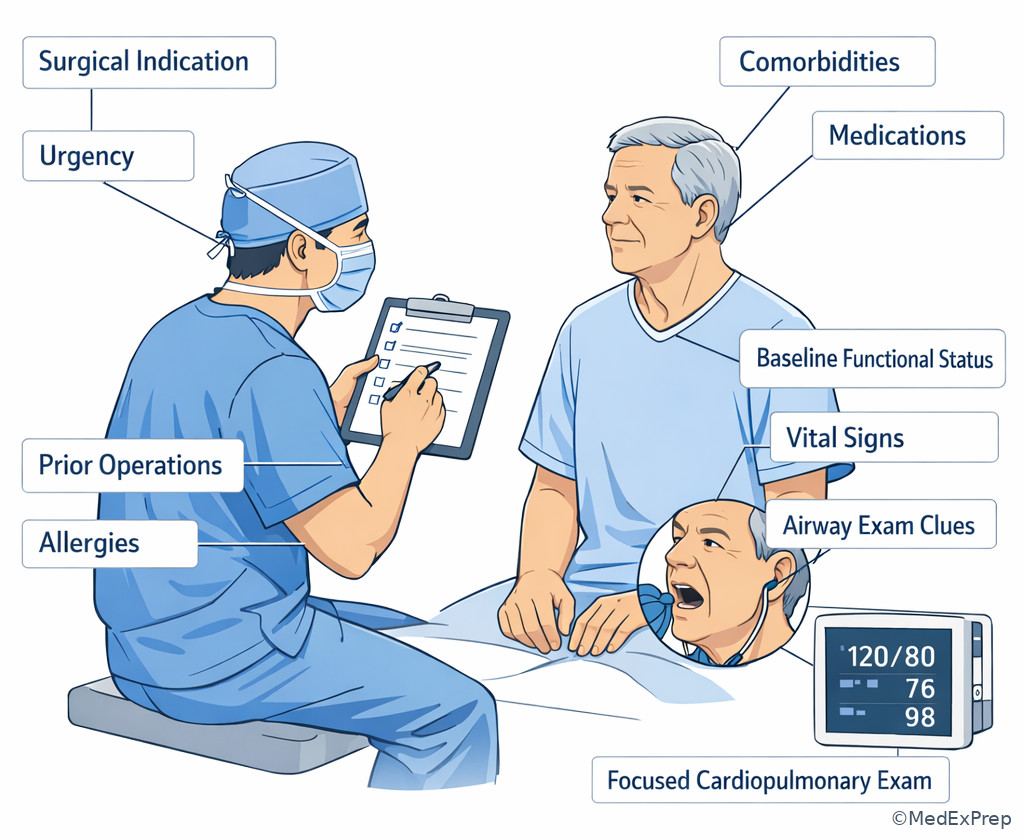
- This framework becomes the base layer for the next topics on cardiopulmonary risk and informed consent. See Fig 1.
Key Terms & Must-Know Facts
1.1.1.1 Key terms
- Urgent/emergent surgery: delay risks ischemia, perforation, hemorrhage, sepsis, or death.
- Elective surgery: procedure can be scheduled after complete optimization.
- Time-sensitive surgery: delay may worsen outcome, but brief focused optimization is reasonable.
- Functional capacity: activity tolerance used to estimate physiologic reserve.
- Active cardiac condition: unstable cardiac issue that may require stabilization before noncardiac surgery.
- Targeted testing: studies ordered only if results change perioperative management.
- Baseline status: patient’s usual cardiopulmonary, renal, hematologic, and nutritional state.
- Optimization: correcting modifiable risk factors before surgery.
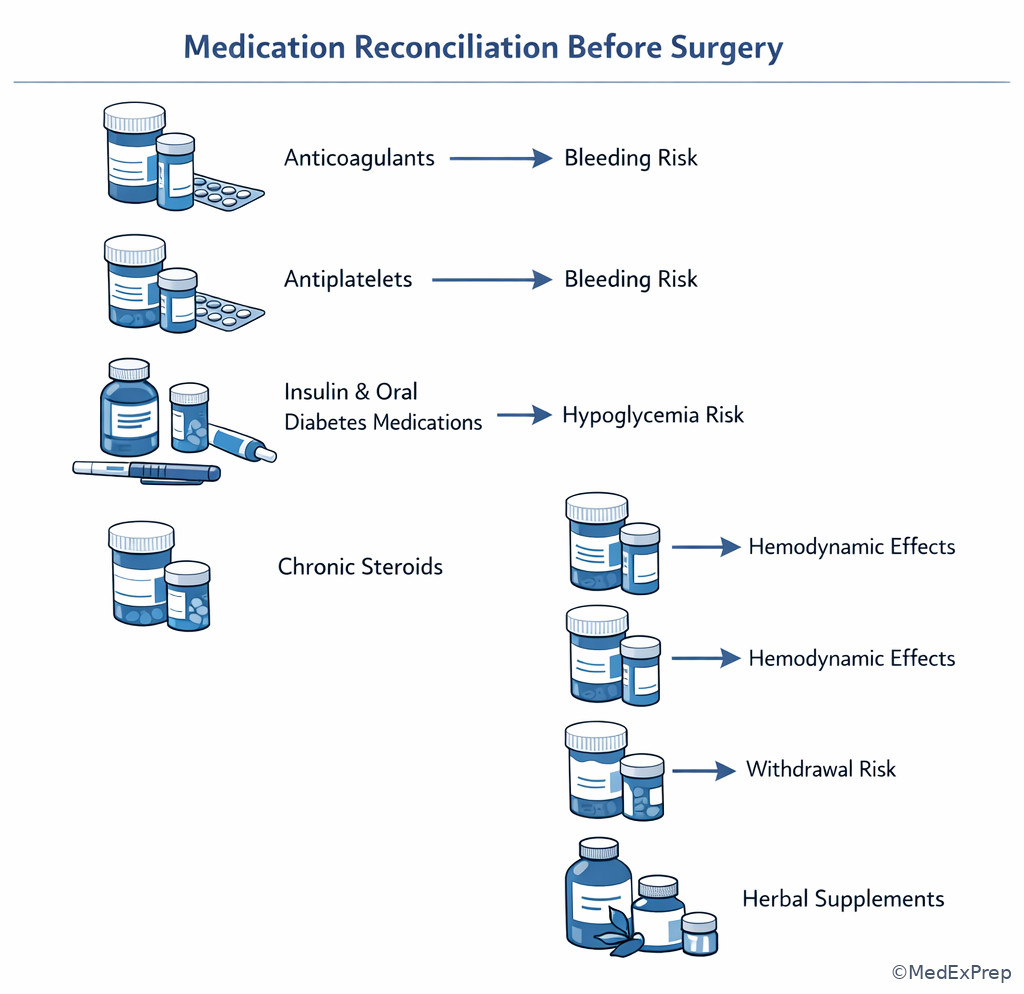
- Medication reconciliation: review of anticoagulants, antiplatelets, insulin, steroids, and home therapies.
- Surgical indication: the disease-based reason the operation is being offered.
- Risk-benefit balance: comparison of harm from surgery versus harm from delay or nonoperative management.
- Shared decision foundation: clear explanation of why surgery is needed and whether safer alternatives exist.
1.1.1.2 Must-know facts
- Unstable patients require stabilization and time-sensitive surgical judgment before routine preop testing.
- Routine labs and imaging are not indicated for every patient.
- A test is useful only if an abnormal result would change timing, anesthetic plan, monitoring, or procedure choice.
- The most important first preop question is: Does this patient need surgery now, later, or not at all?
- History and physical exam drive most of the preoperative plan.
- Medication review is one of the most testable parts of preop assessment.
- Recent change from baseline matters more than chronic stable disease.
- Procedure risk and patient risk must both be considered; neither alone is enough.
- Poorly defined indication is itself a safety problem.
- Local protocols vary; confirm with your institution.
Core content
Exam takeaway: Start with urgency and instability before deciding on testing, optimization, or delay.
flowchart TD
A[Patient scheduled or considered for surgery] --> B{Immediate threat?}
B -->|Yes| C[Resuscitate and control time-sensitive problem]
B -->|No| D[Confirm indication and procedure urgency]
D --> E[Review comorbidities meds prior anesthesia]
E --> F{Will a test change management?}
F -->|Yes| G[Order targeted studies or consult]
F -->|No| H[Proceed with optimization plan]
G --> H
H --> I[Confirm readiness and safety steps] Exam takeaway: Delay only when the problem is modifiable and delay is safer than proceeding.
flowchart TD
A[Need for operation] --> B{Emergent or urgent?}
B -->|Emergent| C[Proceed after focused resuscitation]
B -->|Not emergent| D{Active unstable condition or unclear indication?}
D -->|Yes| E[Delay for clarification or optimization]
D -->|No| F{Testing will change plan?}
F -->|Yes| G[Targeted testing]
F -->|No| H[Proceed]
G --> H Exam takeaway: Use a structured bedside review of indication, comorbidity, medications, airway clues, and vital signs before ordering tests.
Exam takeaway: Anticoagulants, antiplatelets, insulin, steroids, and beta blockers are the medication classes most likely to change perioperative planning.
1.1.1.3 Foundational triage: urgency, indication, and whether surgery should proceed at all
A Explanation
The core decision conflict is proceed now versus pause and clarify. On ABS-style stems, the single rule that resolves the conflict is this: urgency and instability outrank routine preop completeness. If the patient has a time-sensitive surgical threat such as peritonitis, uncontrolled hemorrhage, bowel ischemia, strangulated hernia, or septic source needing control, you do not delay for broad elective workup. If the patient is stable and the indication is uncertain, then the safest answer is often to clarify diagnosis, indication, or alternatives before committing to the operating room.
Start with four questions: What operation is planned? Why is it needed? How urgent is it? What happens if it is delayed? This prevents a common exam error: building a beautiful preop checklist around a procedure that was not yet clearly indicated. A general surgery candidate is expected to recognize that the best preoperative assessment begins before labs, with disease severity and timing.
WHY THIS IS TESTED: exam writers want to know whether you can choose resuscitation and urgent source control over elective completeness, while also recognizing when a vague indication should stop the case.
Key rule: The first preoperative decision is not “Which lab?” It is “Can this patient safely wait?” See Fig 2.
Memory anchor: U-I-S-T = Urgency, Indication, Stability, Targeted testing. Use this order whenever a stem asks for the most appropriate next step before surgery.
Recall: This is the first topic in the course, so there is no prior lesson to build from yet. Use this framework as the anchor for all later perioperative and postoperative decision questions.
Clinician Action: Diagnose whether the condition is emergent, urgent, time-sensitive, or elective based on risk from delay. Order only immediate resuscitative tests needed for unstable patients or focused workup for stable patients. Treat with stabilization and timely operation when delay is unsafe. Refer/Escalate to senior surgeon, anesthesia, ICU, GI, or IR early when the case exceeds routine scope or needs multidisciplinary timing.
B Worked example
A 74-year-old man with hypertension, coronary artery disease, and chronic kidney disease presents with 18 hours of abdominal pain, distention, emesis, tachycardia, fever, and diffuse peritonitis. He takes aspirin and has a remote history of COPD. Creatinine is 1.9 mg/dL, and a nurse notes he has not had a preoperative chest x-ray this year. The board-style task is the most appropriate next step.
Identify task: decide whether to proceed urgently or complete elective preop testing. Extract key facts: peritonitis, fever, tachycardia, likely intra-abdominal catastrophe, time-sensitive need for source control. CKD and CAD raise risk, but they do not erase urgency. Apply rule: unstable or time-sensitive abdominal emergencies get focused resuscitation and urgent operative management, not routine chest x-ray or broad outpatient-style clearance. Eliminate distractors: a chest x-ray is tempting because of age and COPD history, but it will not change immediate management; stress testing is even less appropriate. Verify: safest next step is resuscitation, antibiotics as indicated, type and screen, and urgent surgical management.
C Exam trap
Common wrong answer: “Obtain complete cardiac clearance before surgery.”
Why it is tempting: older patients with CAD trigger anxiety about perioperative myocardial events, and exam takers overgeneralize elective risk algorithms.
Single clue that eliminates it: diffuse peritonitis. That finding makes delay itself dangerous; the preop framework becomes focused stabilization rather than elective optimization.
D Checkpoint
Question: A 63-year-old woman with diabetes and stable angina is scheduled for colectomy after CT-confirmed perforated diverticulitis with free air and generalized tenderness. Which is the most appropriate next step?
- Proceed with focused resuscitation and urgent operative management - Tempting because perforation is dangerous; correct because generalized peritonitis makes source control time-sensitive and outweighs routine elective workup.
- Delay surgery for outpatient stress testing - Tempting because of angina history; wrong because stable chronic disease does not justify delaying urgent source control in perforation.
- Obtain routine pulmonary function testing - Tempting because diabetes may coexist with poor reserve; wrong because it will not change immediate management in urgent abdominal sepsis.
- Repeat abdominal CT with oral contrast - Tempting because imaging can refine anatomy; wrong because the diagnosis and need for operation are already established clinically and radiographically.
If you missed this: Review 1.1.1.1 Foundational triage: urgency, indication, and whether surgery should proceed at all — focus on the rule that time-sensitive surgical disease overrides routine elective preop testing.
1.1.1.4 Focused history and physical: what actually changes perioperative management
A Explanation
The decision conflict here is collect everything versus collect what changes care. The high-yield rule is: prioritize findings that alter anesthesia, bleeding risk, wound risk, postoperative complications, or the choice to delay. A strong preoperative history is not a complete internal medicine encyclopedia. It is a structured search for baseline functional status, active symptoms, prior anesthetic problems, bleeding or clotting history, medication exposures, allergies, frailty or nutritional issues, and prior operations that may change access or risk.
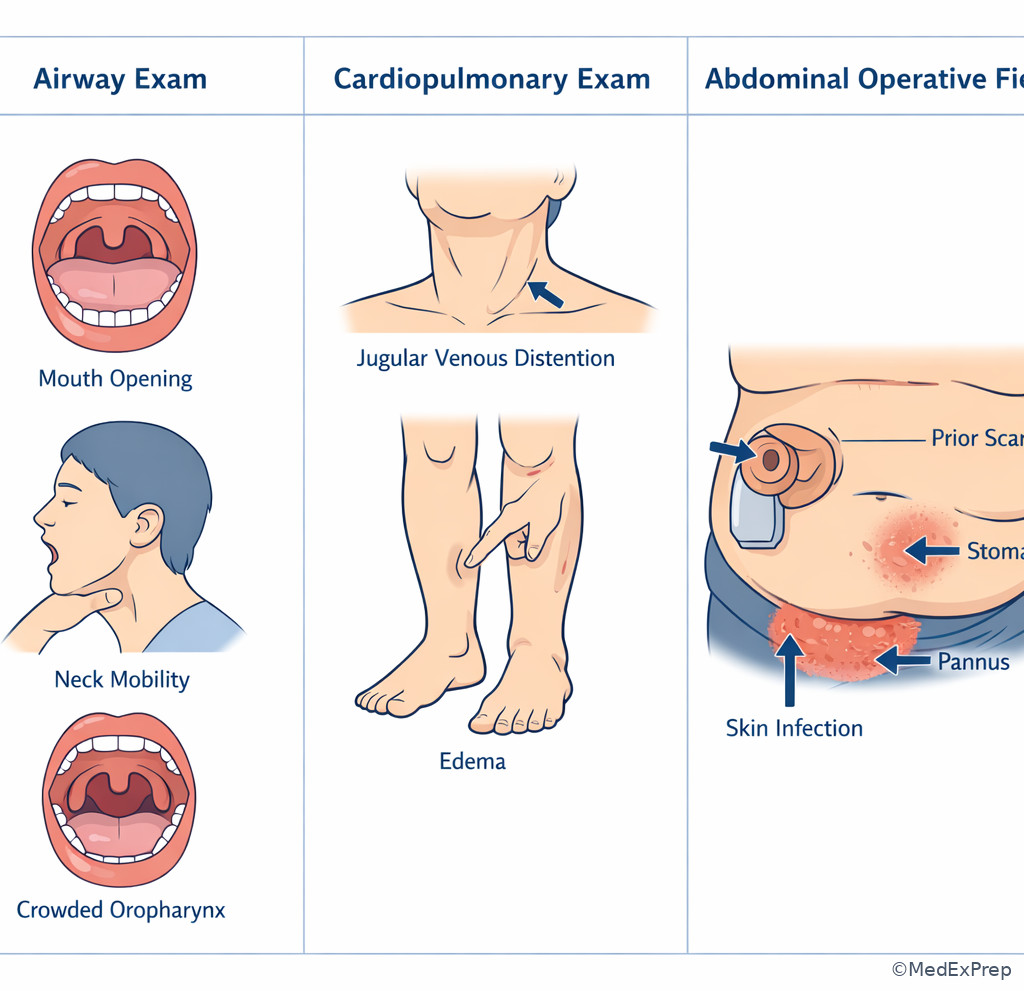
In surgery, the physical exam remains practical and targeted. Vitals matter. Airway clues matter. Cardiopulmonary findings matter. Volume status matters. The operative field matters. Existing infections, skin breakdown, stomas, edema, ascites, and prior scars matter because they can change approach and complications. Board questions often include distracting chronic findings but reward recognition of a change from baseline: new orthopnea, new murmur symptoms, recent COPD flare, active infection, or decompensated cirrhosis are more important than stable chronic diagnoses listed in the chart.
WHY THIS IS TESTED: the test wants you to distinguish chronic stable disease that can be incorporated into planning from active uncontrolled disease that should change timing or trigger escalation.
Medication review deserves special emphasis. See Fig 3. Anticoagulants and antiplatelets affect bleeding and timing. Insulin and antihyperglycemics affect fasting and hypoglycemia management. Chronic steroids raise concern for adrenal suppression. Beta blockers are usually continued if already prescribed. Herbal supplements and alcohol use can influence bleeding, withdrawal, and anesthetic response. Prior difficult intubation or postoperative nausea also matters because it changes planning.
High-Yield Connection: This concept is tested alongside Cardiopulmonary Risk Stratification. Here you identify the red-flag history and baseline reserve; in the next lesson you will decide how those findings translate into operative risk and further workup.
Clinician Action: Diagnose active symptoms, baseline function, and prior perioperative problems by focused history and exam. Order only studies suggested by those findings. Treat reversible issues such as dehydration, infection, poor glucose control, or medication mismatch. Refer/Escalate to anesthesia for difficult airway history, to medicine/cardiology/pulmonology when active uncontrolled disease affects timing, and to nutrition or ICU when frailty or physiologic reserve is poor.
B Worked example
A 59-year-old woman is being evaluated for elective ventral hernia repair. She has obesity, OSA on CPAP, rheumatoid arthritis on chronic prednisone, and a remote appendectomy. She mentions mild chronic ankle edema, but the distracting clue is that she is worried about a family history of “anesthesia allergy.” On exam, vitals are normal, Mallampati is crowded, lungs are clear, and she denies chest pain or recent dyspnea. The question asks what preoperative detail most requires explicit clarification.
Identify task: determine which history element changes perioperative planning the most. Extract key facts: chronic prednisone suggests adrenal suppression risk; OSA affects airway and postoperative monitoring; unclear “anesthesia allergy” may or may not be meaningful. Apply rule: medication exposures and prior actual anesthetic reactions matter more than vague family anecdotes. Eliminate distractors: chronic mild edema without heart failure symptoms is less urgent; remote appendectomy scar is expected. Verify: clarify steroid dose and duration, CPAP use, and whether there was a true prior personal anesthetic complication.
C Exam trap
Common wrong answer: “Focus on remote prior surgery alone to predict this anesthetic course.”
Why it is tempting: prior surgery feels concrete and exam takers assume a past operation automatically clears current risk.
Single clue that eliminates it: current chronic prednisone use. Medication exposure creates an active perioperative planning issue now, unlike an uncomplicated remote appendectomy.
D Checkpoint
Question: During preoperative assessment for an elective cholecystectomy, which history finding most strongly suggests the need to alter routine perioperative planning?
- Remote inguinal hernia repair 20 years ago - Tempting because prior surgery can affect anatomy; wrong because this isolated remote event rarely changes present perioperative planning.
- Daily prednisone use for 8 months - Tempting because chronic medication use matters; correct because prolonged steroids may signal adrenal suppression and impaired wound healing.
- Seasonal allergic rhinitis - Tempting because “allergy” can sound anesthesia-relevant; wrong because this does not usually alter major perioperative decision-making.
- History of motion sickness as a child - Tempting because it may correlate with postoperative nausea risk; wrong because it is less management-defining than chronic steroid exposure.
If you missed this: Review 1.1.1.2 Focused history and physical: what actually changes perioperative management — focus on identifying history elements that change anesthesia, bleeding, endocrine, or postoperative planning.
- The first question in preop assessment is urgency: can the patient safely wait?
- True or False: routine testing is indicated for every patient over age 65. False.
- Name 3 medication categories that commonly change perioperative planning: anticoagulants/antiplatelets, insulin or antihyperglycemics, chronic steroids.
| Preop domain | Ask / examine | Why it matters | Typical action |
|---|---|---|---|
| Urgency | What happens if surgery is delayed? | Determines whether optimization can occur first | Proceed urgently vs delay |
| Cardiopulmonary symptoms | Chest pain, dyspnea, orthopnea, recent exacerbation | May signal active unstable disease | Escalate or optimize |
| Functional reserve | Stairs, walking, daily activities | Predicts tolerance of stress | Risk frame, possible further workup |
| Bleeding risk | Anticoagulants, liver disease, bleeding history | Affects timing and reversal planning | Hold, reverse, or modify plan |
| Endocrine/diabetes | Insulin use, steroid use, glucose control | Hypoglycemia and adrenal issues | Adjust meds, monitor glucose |
| Airway | OSA, difficult intubation history, exam clues | Affects anesthetic planning | Anesthesia planning, postoperative monitoring |
| Prior operations | Scar pattern, mesh, stoma, complications | Changes approach and access | Plan operative strategy |
Exam takeaway: Airway clues, cardiopulmonary findings, volume status, and operative-field issues are the highest-yield exam components.
1.1.1.5 Targeted testing: when a preop test helps and when it is waste
A Explanation
The decision conflict is order broadly to feel safe versus order selectively to improve care. The rule is simple: only order a preoperative test if the result could change management. “Change management” means altering timing, anesthesia approach, perioperative monitoring, medication plan, transfusion preparation, or even canceling/postponing the case. A test ordered out of habit is not board-correct unless it affects the plan.
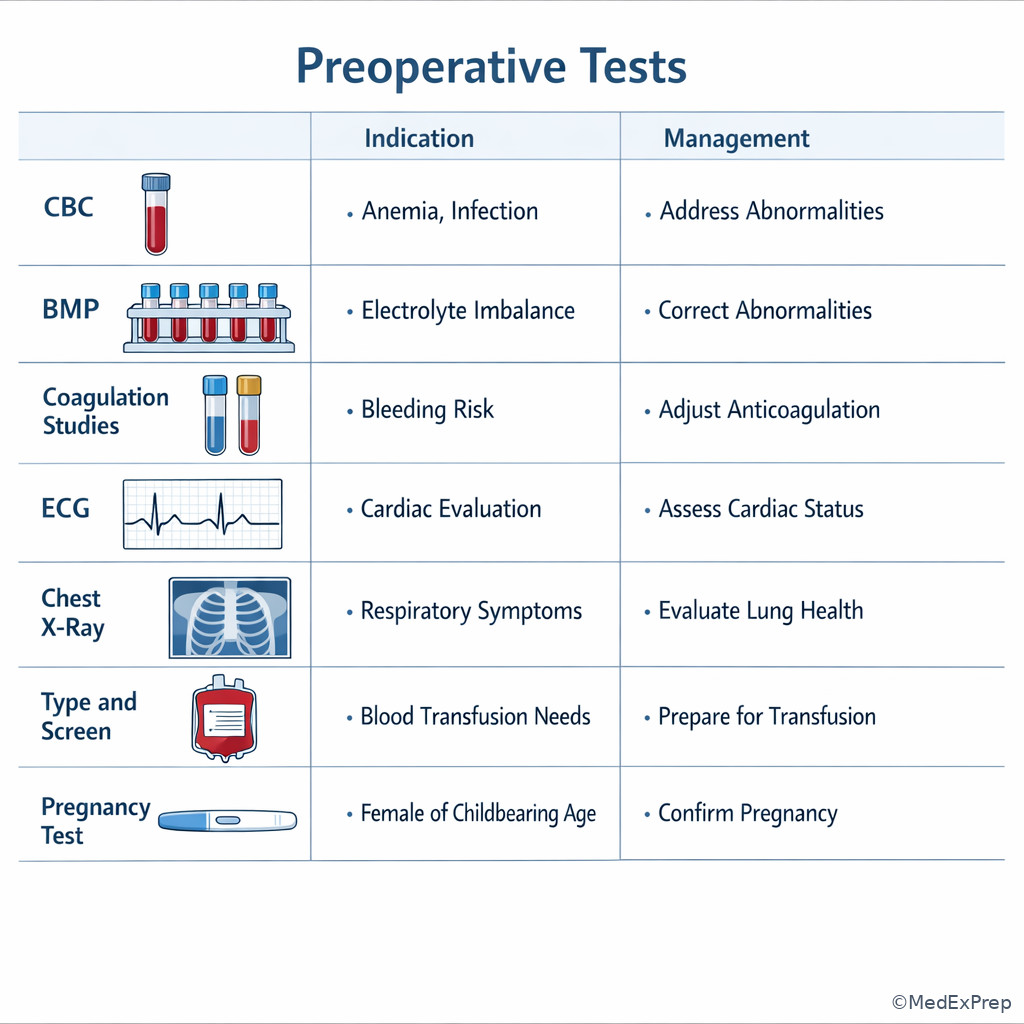
For a healthy patient having low-risk surgery, little or no testing may be appropriate. For a patient with renal disease, a creatinine may matter. For a patient with anemia symptoms or expected blood loss, CBC matters. Pregnancy testing matters when applicable and results change anesthetic or procedural decisions. ECG is not for everybody, but it becomes more reasonable when age, disease burden, or surgical stress could make findings actionable. Chest x-ray is especially overused; abnormal chronic but stable radiographs often add little if there are no current symptoms or known disease progression.
Board writers commonly insert irrelevant abnormal values from prior records or mention “routine preop panel” as bait. Resist that. Ask whether the planned surgery and this patient’s history create a decision point. See Fig 4.
Key rule: A test without an action attached is not a high-value preop test.
High-Yield Connection: Testing strategy overlaps with postoperative complication recognition. Unnecessary preop studies can distract from the baseline values that actually matter after surgery, such as hemoglobin, creatinine, and glucose trends.
Clinician Action: Diagnose whether symptoms, organ dysfunction, or operative stress create a testable risk. Order CBC, BMP, coagulation studies, ECG, pregnancy test, type and screen, or imaging only when tied to expected management changes. Treat identified abnormalities before elective surgery when feasible. Refer/Escalate if abnormal findings reveal active unstable disease or complex optimization needs.
B Worked example
A 41-year-old woman with symptomatic cholelithiasis is scheduled for elective laparoscopic cholecystectomy. She has well-controlled hypertension, no cardiopulmonary symptoms, no renal disease, and walks two miles daily. A distracting chart note shows a normal chest x-ray from two years ago and a prior mildly elevated AST during pregnancy. The stem asks which preoperative test is most appropriate.
Identify task: choose a targeted test, not a ritual panel. Extract key facts: low-intermediate stress surgery, no active cardiopulmonary symptoms, good functional status, no organ failure history. Apply rule: broad routine testing is not needed if no result would change management. Depending on institutional practice and pregnancy potential, targeted pregnancy testing may be appropriate; routine chest x-ray and stress testing are not. Eliminate distractors: past normal chest imaging is irrelevant, and mild old transaminitis without current signs does not mandate liver panel solely as “preop clearance.” Verify: the most appropriate answer is the test tied to a real decision point, often pregnancy testing if applicable, otherwise no additional routine testing.
C Exam trap
Common wrong answer: “Order CBC, BMP, coagulation panel, chest x-ray, ECG, and urinalysis on all surgical patients.”
Why it is tempting: complete panels feel comprehensive and reduce anxiety.
Single clue that eliminates it: healthy patient with no management-changing history. When the patient and procedure are low risk, indiscriminate testing is not the best answer.
D Checkpoint
Question: A 35-year-old man without cardiopulmonary symptoms is scheduled for elective inguinal hernia repair. He has no chronic disease, takes no medications, and has good exercise tolerance. Which preoperative approach is most appropriate?
- Routine chest x-ray and ECG - Tempting because surgery involves anesthesia; wrong because no symptoms or history suggest these studies would change management.
- Routine CBC, BMP, and coagulation studies - Tempting because “baseline labs” sound safe; wrong because routine testing is not indicated without a management-changing reason.
- No additional routine testing beyond targeted standard requirements if applicable - Tempting because minimalism can feel risky; correct because testing should be selective and actionable.
- Stress echocardiography - Tempting because unseen cardiac disease is concerning; wrong because there is no symptom burden or risk signal justifying it.
If you missed this: Review 1.1.1.3 Targeted testing: when a preop test helps and when it is waste — focus on the discriminator that a test must change timing, monitoring, or management.
Exam takeaway: Match the test to a symptom, disease, medication, or planned blood-loss concern that would change care.
flowchart TD
A[Considering a preop test] --> B{Active symptom or known disease?}
B -->|No| C{Low-risk surgery and healthy patient?}
C -->|Yes| D[Often no routine test]
C -->|No| E{Expected blood loss or medication issue?}
B -->|Yes| F[Targeted test based on history]
E -->|Yes| G[CBC BMP coag studies or type and screen as indicated]
E -->|No| H[Only essential targeted tests]
F --> H
G --> H | Test | When it is commonly useful | What it may change | Common overuse trap |
|---|---|---|---|
| CBC | Anemia symptoms, chronic disease, expected blood loss | Transfusion planning, delay for severe anemia, type and screen | Ordering for every minor case |
| BMP/creatinine | Renal disease, diuretics, ACE inhibitor use, electrolyte concern | Fluid plan, med adjustment, timing | Ignoring history and ordering reflexively |
| Coagulation studies | Anticoagulants, liver disease, bleeding disorder concern | Reversal, delay, product planning | Ordering despite no bleeding risk |
| ECG | Known cardiac disease, symptoms, higher-risk patient/procedure | Further evaluation, monitoring | Ordering for young asymptomatic healthy patients |
| Chest x-ray | New cardiopulmonary symptoms or known unstable thoracic disease | Delay, treatment, anesthetic planning | Age alone |
| Pregnancy test | When pregnancy status is relevant and results affect care | Anesthetic/procedural decisions | Ignoring reproductive potential context |
| Type and screen | Expected blood loss or transfusion possibility | Blood preparation | Ordering for negligible blood-loss procedures |
Exam takeaway: CBC, BMP, ECG, chest x-ray, coagulation studies, and type and screen should each be tied to a specific management-changing indication.
1.1.1.6 Optimization before surgery: medications, modifiable risk, and when to delay
A Explanation
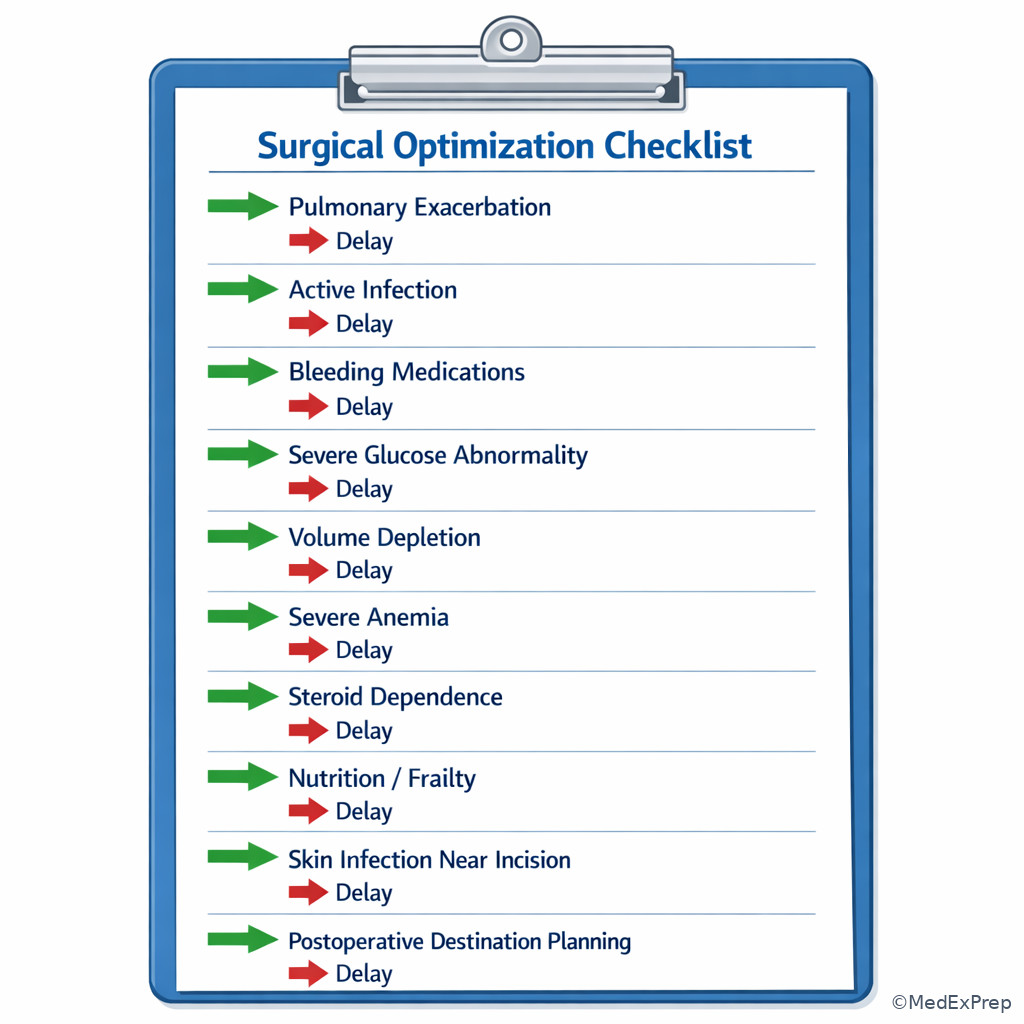
This section asks you to choose between proceeding with known risk versus pausing to correct a modifiable problem. The governing rule is: delay elective surgery for active, modifiable conditions when delay is safer than proceeding. Do not delay urgent surgery for perfect numbers, but do use the time available in elective cases to fix what changes outcome.
Common modifiable issues include uncontrolled infection outside the surgical target, decompensated cardiopulmonary disease, severe electrolyte disturbance, profound hyperglycemia or hypoglycemia risk, severe untreated anemia when correction would matter, volume depletion, uncontrolled hypertension in some settings, and medication mismanagement. Medication planning is particularly testable: continue some chronic agents, hold or adjust others, and coordinate anticoagulant or antiplatelet interruption based on bleeding versus thrombosis. Exact local protocols vary, but the stable principle is to identify medications that affect hemostasis, hemodynamics, withdrawal, glycemic control, or endocrine stress response.
Optimization also includes practical surgical issues: smoking cessation when time permits, nutritional assessment in frail or cachectic patients, skin preparation and infection prevention, and planning for postoperative destination. In the ABS frame, optimization is not bureaucracy. It is targeted risk reduction linked to a specific complication you are trying to avoid.
WHY THIS IS TESTED: exams reward candidates who know what is worth delaying for and what is not. They also punish indiscriminate cancellation when the disease process itself is more dangerous than the modifiable risk.
Memory anchor: BLEED-GAS for the most testable preop delay/adjust categories: Bleeding meds, Lung flare, Endocrine issues, Electrolytes, Decompensated organ disease, Glucose, Anemia, Sepsis/skin infection.
Common pitfall: do not use optimization as an excuse to postpone needed source control, hemorrhage control, or ischemia management.
Forward reference: In the upcoming lesson on Informed Consent And Safety, these optimization decisions connect directly to what risks, alternatives, blood-product issues, drains, and possible conversions must be discussed before the case.
Clinician Action: Diagnose whether an abnormality is chronic stable versus active modifiable risk. Order focused confirmatory labs or consultations only when results alter timing or treatment. Treat medication issues, sepsis, glycemic extremes, volume depletion, anemia, or exacerbations before elective surgery when feasible. Refer/Escalate to anesthesia, cardiology, pulmonology, medicine, ICU, or hematology when the optimization problem exceeds routine surgical management.
B Worked example
A 68-year-old man is scheduled for elective colectomy for colon cancer in three weeks. He has atrial fibrillation on apixaban, insulin-treated diabetes, COPD, and chronic prednisone for polymyalgia rheumatica. He reports increased sputum and wheezing for three days. A distracting detail is mild chronic anemia with hemoglobin 10.4 g/dL. The stem asks what requires immediate preoperative attention.
Identify task: choose the modifiable issue that changes whether surgery should proceed as planned. Extract key facts: active COPD flare symptoms now, anticoagulant needs perioperative planning, chronic steroid exposure, diabetes. Apply rule: active pulmonary exacerbation is a management-changing instability in an elective case and should be treated before surgery. Eliminate distractors: mild chronic anemia may matter, but it is less acute than current respiratory exacerbation; chronic apixaban use matters, but timing can be planned once the patient is medically optimized. Verify: treat and stabilize the pulmonary flare, then continue broader perioperative planning.
C Exam trap
Common wrong answer: “Proceed because colon cancer is cancer surgery and should never be delayed.”
Why it is tempting: malignancy sounds urgent, and examinees fear under-treating cancer.
Single clue that eliminates it: elective timing with active COPD exacerbation. Brief optimization is safer than proceeding into anesthesia with active pulmonary instability.
D Checkpoint
Question: Which finding most strongly supports delaying an elective abdominal wall reconstruction for optimization?
- Stable chronic kidney disease with unchanged creatinine - Tempting because renal disease increases risk; wrong because stable baseline disease alone does not mandate delay.
- Well-controlled hypertension on home medications - Tempting because blood pressure matters perioperatively; wrong because control is already adequate.
- New productive cough and wheezing for 48 hours - Tempting because pulmonary issues affect anesthesia; correct because an active respiratory exacerbation is modifiable and increases perioperative risk now.
- Remote history of postoperative nausea - Tempting because anesthesia planning changes; wrong because this usually changes prophylaxis, not timing.
If you missed this: Review 1.1.1.4 Optimization before surgery: medications, modifiable risk, and when to delay — focus on the discriminator between chronic stable disease and active modifiable instability.
- The most important reason to delay elective surgery is an active modifiable problem that makes proceeding less safe than brief optimization.
- True or False: chronic stable disease always mandates delay. False.
- Name the 3 medication groups every preop review should explicitly address: anticoagulants/antiplatelets, diabetes medications, chronic steroids.
| Issue | Proceed now? | Why | Board-style action |
|---|---|---|---|
| Strangulated hernia with sepsis | Yes, after focused resuscitation | Delay worsens ischemia and source control failure | Resuscitate, antibiotics, urgent operation |
| Elective hernia repair with active COPD flare | No | Modifiable pulmonary instability increases anesthetic risk | Treat flare, then reschedule |
| Stable CKD baseline creatinine | Usually yes | Chronic baseline informs planning but not automatic delay | Check labs if actionable, adjust fluids/meds |
| Anticoagulated patient for elective colectomy | Depends on indication and timing | Bleeding-thrombosis balance must be planned | Coordinate hold/restart strategy |
| Poorly controlled diabetes with marked hyperglycemia | Often no for elective case | Raises infection and metabolic risk | Improve control, monitor closely |
| Remote uncomplicated anesthesia history | Usually yes | Past tolerance helps but does not replace current assessment | Document and proceed |
Exam takeaway: Delay elective cases for active modifiable instability, not for every chronic baseline abnormality.
1.1.1.7 Integrating the framework in board-style surgical decisions
A Explanation
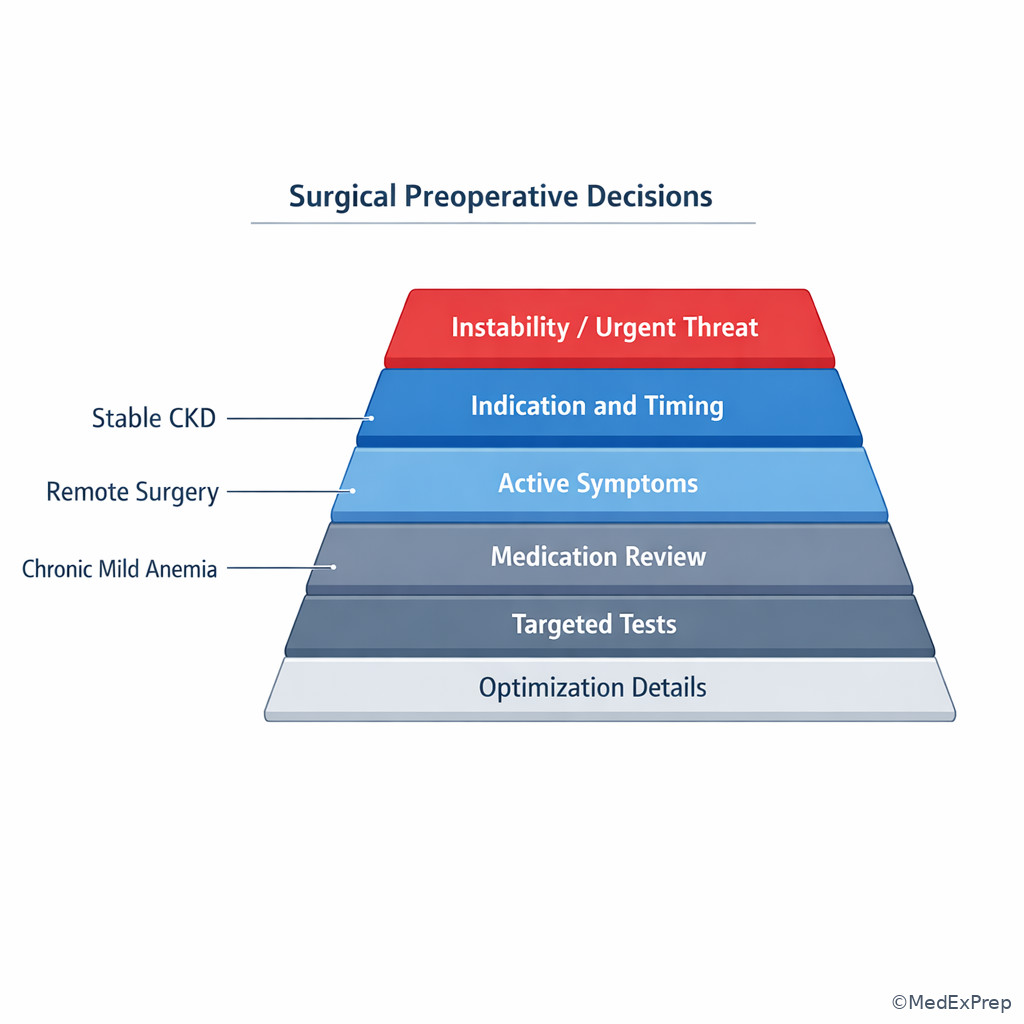
The final decision conflict is single-issue thinking versus integrated perioperative judgment. Most real board questions combine urgency, comorbidity, testing, and optimization. The resolving rule is sequence: stability and urgency first, then indication, then targeted risk assessment, then actionable preparation. If you keep that order, you will avoid most distractors.
Integrated questions often present a patient with several true findings but only one finding that should drive the immediate decision. For example, chronic atrial fibrillation on anticoagulation, obesity, and diabetes may all matter, but new chest pain or sepsis changes the timing question immediately. Likewise, chronic mild anemia and CKD may be real, but generalized peritonitis means urgent operation. The exam is not asking you to ignore the other facts; it is asking you to rank them correctly.
This is also where surgical judgment intersects with professionalism and safety. If the indication is weak, the plan is unclear, the operation is higher risk than the disease, or essential information is missing, the correct answer may be to stop and clarify. “Proceed because the OR is booked” is never the board answer. Strong candidates use a framework that protects the patient from both under-treatment and over-treatment.
WHY THIS IS TESTED: ABS-style assessment rewards prioritization. The best answer is often the safest broadly accepted next step, not the most exhaustive or subspecialized maneuver.
High-Yield Connection: This integrated framework is frequently paired with trauma/critical care reasoning later in the course. The shared principle is the same: stabilize first, then refine diagnosis and definitive management.
Clinician Action: Diagnose the leading time-sensitive threat and the key modifiable baseline risks. Order only the minimum data set needed to safely proceed or justify delay. Treat with resuscitation, medication adjustment, and optimization matched to urgency. Refer/Escalate early when cardiopulmonary instability, airway concerns, or specialty-dependent perioperative management exceeds core surgical scope.
B Worked example
A 72-year-old woman with insulin-dependent diabetes, prior stroke without residual deficit, atrial fibrillation on anticoagulation, and chronic stable heart failure presents with an incarcerated ventral hernia, increasing pain, tachycardia, leukocytosis, and skin erythema over the hernia. The distracting detail is that her outpatient PCP note last month recommended “formal cardiac clearance before any surgery.” The question asks for the most appropriate preoperative approach.
Identify task: integrate urgency, anticoagulation, heart history, and infection risk. Extract key facts: incarcerated hernia with concern for strangulation or evolving sepsis; time-sensitive abdominal wall emergency; chronic stable heart failure, not active decompensation. Apply rule: urgent surgical disease takes priority over outpatient-style clearance. Anticoagulation and heart failure still matter, but they shape focused resuscitation and perioperative planning rather than causing delay for elective workup. Eliminate distractors: stress testing and clinic-based cardiology optimization are tempting because of age and prior PCP wording, but the current acute abdomen pattern dominates. Verify: resuscitate, assess for ischemia/strangulation, manage anticoagulation as needed, involve anesthesia and senior surgeon, and proceed urgently.
C Exam trap
Common wrong answer: “Follow the prior outpatient recommendation for formal clearance before any operation.”
Why it is tempting: a prior clinician recommendation sounds authoritative and candidates may defer to it automatically.
Single clue that eliminates it: the clinical situation has changed. Acute incarceration with systemic signs creates a new urgency category that supersedes prior elective planning language.
D Checkpoint
Question: A 70-year-old man with stable coronary disease, CKD, and diabetes is evaluated for an urgent colectomy for obstructing colon cancer. He is hemodynamically stable, has no active chest pain or dyspnea, and creatinine is at baseline. Which preoperative strategy is most appropriate?
- Delay for comprehensive outpatient clearance and stress testing - Tempting because of multiple comorbidities; wrong because urgent obstruction requires timely treatment and there is no active unstable cardiopulmonary symptom.
- Proceed with focused assessment, targeted actionable testing, and perioperative optimization - Tempting because it balances urgency and risk; correct because the patient is stable but cannot be delayed for unnecessary exhaustive workup.
- Proceed without reviewing medications because surgery is urgent - Tempting because delay is undesirable; wrong because medication review remains essential even in urgent cases.
- Cancel surgery because CKD increases perioperative risk - Tempting because CKD is real risk; wrong because stable baseline CKD is not by itself a contraindication to needed urgent surgery.
If you missed this: Review 1.1.1.5 Integrating the framework in board-style surgical decisions — focus on ranking urgency above exhaustive clearance while still performing focused actionable preparation.
Exam takeaway: In mixed-information stems, the immediate decision is driven by the highest-risk active finding, not by the longest comorbidity list.
flowchart LR
A[Highest priority active threat] --> B[Urgency and stability]
B --> C[Confirm indication]
C --> D[Medication and comorbidity review]
D --> E[Targeted tests only]
E --> F[Optimization and proceed or delay]
Exam takeaway: Separate chronic baseline conditions from the one active finding that changes whether surgery proceeds now.
Exam Traps & Differentiators
Common traps & distractors: These questions are less about memorizing a lab list and more about choosing the right sequence under pressure.
- Most common wrong answer and why: ordering broad “clearance” before urgent surgery. This is tempting because it feels comprehensive, but urgent pathology is often the stronger risk.
- Looks similar but isn't: stable chronic comorbidity versus active decompensation. The stem usually gives one change-from-baseline clue that separates them.
- If the stem says generalized peritonitis, think urgent source control after focused resuscitation.
- If the stem says good functional status and no symptoms before a low-risk operation, think minimal or no routine testing.
- If the stem says new cough, wheeze, chest pain, orthopnea, or fever before an elective case, think active issue requiring optimization or delay.
- If the stem says chronic anticoagulation, insulin use, or daily steroids, think medication planning rather than ignoring home therapy.
- If the stem says unclear indication or poor risk-benefit ratio, think stop and clarify before proceeding.
| Looks like | Actually means | Discriminator | Best exam move |
|---|---|---|---|
| Older patient + CAD | Not automatic delay | Is there active unstable symptom or urgent surgical disease? | Rank urgency first |
| Abnormal chronic lab | May be baseline | Is the value new, severe, or management-changing? | Contextualize before canceling |
| Prior outpatient “clearance needed” note | Not binding in a new urgent scenario | Current acute presentation overrides old elective plan | Reassess urgency |
| Desire for complete testing | Often low-value | Would result change timing or treatment? | Order selectively |
| History of chronic disease | Planning issue, not always delay issue | Stable baseline versus exacerbation | Proceed if stable and indicated |
Related trap from the upcoming Cardiopulmonary Risk Stratification topic: do not confuse “has risk factors” with “needs extensive delay.” Related trap from Informed Consent And Safety: do not confuse “patient has signed consent” with “the operation is ready to proceed safely.”
Review connection: The traps above test prioritization within preoperative decision-making. If any felt unfamiliar, revisit 1.1.1.1 Foundational triage and 1.1.1.3 Targeted testing before attempting the Self-check quiz.
Algorithm / Approach
Rapid Review
- Urgent abdominal sepsis → source control outranks routine clearance
- Low-risk surgery + healthy patient → often no routine testing
- Chronic stable disease → planning issue, not automatic cancellation
- Change from baseline → stronger signal than chronic diagnosis list
- Preop test → order only if management would change
- Medication review → anticoagulants, insulin, steroids are highest yield
- Remote prior surgery → useful for approach, weak for current timing unless prior complication
- Active pulmonary flare → delay elective surgery for optimization
- Generalized peritonitis → urgent operation after focused resuscitation
- Outpatient “clearance” note → does not override a new urgent presentation
- Unclear indication → stop and clarify before proceeding
- Age alone → poor reason for chest x-ray or ECG
- Expected blood loss → think CBC and type/screen if actionable
- Patient safety question → the best answer is the safest broadly accepted next step
Self-check quiz
1. A 28-year-old man without chronic disease is evaluated before elective excision of a small lipoma. He takes no medications, climbs stairs without limitation, and has normal vitals. Which preoperative approach is most appropriate?
- Routine CBC, BMP, ECG, and chest x-ray
- No additional routine testing beyond targeted requirements if applicable
- Stress testing because anesthesia may unmask occult disease
- Coagulation studies because every incision carries bleeding risk
2. A 67-year-old woman is being seen before elective laparoscopic ventral hernia repair. She has hypertension, chronic kidney disease with stable baseline creatinine, and no chest pain or dyspnea. Which finding most requires a change in perioperative planning?
- Daily prednisone for the last 9 months
- Remote cataract surgery under sedation
- Seasonal allergies treated with cetirizine
- Family history of postoperative nausea
3. A 73-year-old man with diabetes, CAD, and mild COPD presents with obstructing sigmoid cancer and progressive abdominal distention. He is hemodynamically stable, has no active chest pain, and creatinine is at baseline. A prior outpatient note recommended cardiology clearance before any future surgery. What is the most appropriate next step?
- Delay surgery for outpatient stress testing and full cardiology clearance
- Proceed with focused preoperative assessment, targeted testing, and urgent operative planning
- Cancel operation because comorbidity burden is too high
- Proceed immediately without reviewing medications because cancer is urgent
4. A 62-year-old woman is preparing for elective colectomy. She has obesity, OSA on CPAP, insulin-treated diabetes, and chronic atrial fibrillation on apixaban. Today she reports new productive cough and wheezing for 2 days. Which is the most appropriate next step?
- Proceed because all elective surgical patients have some respiratory risk
- Delay elective surgery and treat the active pulmonary issue before proceeding
- Ignore the pulmonary symptoms and only plan anticoagulation interruption
- Order a routine chest x-ray and proceed regardless of the result
5. A 45-year-old woman is scheduled for elective laparoscopic cholecystectomy. She has well-controlled hypertension, no cardiopulmonary symptoms, normal exercise tolerance, and no renal disease. Which test is most appropriate only if it changes management based on patient context?
- Routine chest x-ray
- Stress echocardiography
- Targeted pregnancy testing when pregnancy status is relevant
- Routine coagulation studies in every patient
6. A 76-year-old man with stable heart failure, chronic atrial fibrillation on anticoagulation, and CKD presents with an incarcerated groin hernia, worsening pain, leukocytosis, tachycardia, and overlying skin erythema. He denies chest pain. Which is the most appropriate preoperative strategy?
- Delay for formal cardiac clearance because of heart failure history
- Proceed with focused resuscitation, medication review, and urgent operative management
- Admit for several days of observation to trend the leukocytosis
- Obtain pulmonary function tests before any anesthesia exposure
7. A 64-year-old woman with colon cancer is scheduled for elective resection in 2 weeks. She has diabetes, COPD, chronic prednisone use, and hemoglobin 10.1 g/dL that has been stable for months. She now has 3 days of increased sputum, wheezing, and reduced exercise tolerance but no fever. Which finding most strongly justifies delaying surgery for optimization?
- Stable chronic anemia
- Active respiratory exacerbation
- History of remote postoperative nausea
- Prior appendectomy scar
8. A 58-year-old man with well-controlled hypertension and no bleeding history is scheduled for elective thyroid lobectomy. He takes lisinopril and an herbal supplement, has good functional status, and asks why he is not getting a “full preop panel” like his friend did before another operation. What is the best explanation for the most appropriate next step?
- All patients need identical routine testing before anesthesia to establish a baseline
- Testing is chosen selectively when results would change timing, treatment, or monitoring
- Chest x-ray is mandatory in every patient older than 50 years
- Coagulation studies are required before any neck incision even without bleeding risk factors
Answer key
1.1.1.8 1. Answer: B
A. Routine CBC, BMP, ECG, and chest x-ray - Tempting because it feels comprehensive and safe. It is incorrect for this scenario because the patient is healthy, asymptomatic, and undergoing a low-risk minor operation, so these tests are unlikely to change management. Single stem clue: young healthy patient with excellent functional status undergoing minor elective surgery. Source: ACS and standard perioperative evaluation principles support selective rather than routine testing.
B. No additional routine testing beyond targeted requirements if applicable - Tempting because it may feel too minimal. It is correct because no history, symptom, medication, or procedural feature suggests a management-changing test is needed. Single stem clue: no chronic disease, no symptoms, low-risk procedure. Source: Townsend et al.; ACS perioperative principles.
C. Stress testing because anesthesia may unmask occult disease - Tempting because occult disease is always possible. It is incorrect because stress testing is not used as a screening tool in asymptomatic low-risk patients. Single stem clue: normal exercise tolerance and no cardiopulmonary symptoms. Source: ACC/AHA perioperative guidance.
D. Coagulation studies because every incision carries bleeding risk - Tempting because surgery implies bleeding. It is incorrect because coagulation testing should be tied to bleeding history, liver disease, anticoagulant use, or suspected coagulopathy, none of which is present. Single stem clue: no medications and no bleeding history. Source: standard perioperative testing recommendations.
If you missed this: Review 1.1.1.3 Targeted testing: when a preop test helps and when it is waste — focus on the rule that a test must change management to be worth ordering.
1.1.1.9 2. Answer: A
A. Daily prednisone for the last 9 months - Tempting because chronic medication exposure often matters. It is correct because prolonged steroid use may affect adrenal response, wound healing, and infection risk, which can alter perioperative planning. Single stem clue: chronic daily steroid use. Source: Sabiston; perioperative endocrine management principles.
B. Remote cataract surgery under sedation - Tempting because prior anesthesia history is relevant. It is incorrect because an uncomplicated remote minor procedure is less management-changing than chronic steroid dependence. Single stem clue: remote and uncomplicated. Source: standard preop history frameworks.
C. Seasonal allergies treated with cetirizine - Tempting because “allergies” can sound like anesthetic relevance. It is incorrect because this does not usually alter operative timing or core perioperative planning. Single stem clue: benign allergic history without anesthetic reaction. Source: perioperative assessment texts.
D. Family history of postoperative nausea - Tempting because it might suggest anesthetic susceptibility. It is incorrect because it is far less consequential than the patient’s own steroid exposure. Single stem clue: family history rather than patient-specific endocrine risk. Source: anesthesia planning principles.
If you missed this: Review 1.1.1.2 Focused history and physical: what actually changes perioperative management — focus on medication exposures that alter operative planning.
1.1.1.10 3. Answer: B
A. Delay surgery for outpatient stress testing and full cardiology clearance - Tempting because the patient is older and has CAD, and the note explicitly mentions clearance. It is incorrect because obstructing colon cancer is urgent, and he has no active unstable cardiac symptoms mandating exhaustive delay. Single stem clue: urgent obstruction with no active chest pain. Source: ACC/AHA perioperative guidance; surgical oncology urgency principles.
B. Proceed with focused preoperative assessment, targeted testing, and urgent operative planning - Tempting because it balances both urgency and comorbidity. It is correct because the patient is stable but has a time-sensitive surgical problem that should not be postponed for unnecessary outpatient workup. Single stem clue: obstructing cancer plus hemodynamic stability. Source: Sabiston; ACC/AHA.
C. Cancel operation because comorbidity burden is too high - Tempting because multiple conditions increase risk. It is incorrect because stable comorbidities rarely justify canceling needed surgery by themselves. Single stem clue: creatinine at baseline and no active chest symptoms. Source: general perioperative care standards.
D. Proceed immediately without reviewing medications because cancer is urgent - Tempting because time matters. It is incorrect because urgent does not mean careless; medication review remains essential, especially in patients with diabetes and CAD. Single stem clue: urgent but stable, allowing focused preparation. Source: ACS perioperative safety principles.
If you missed this: Review 1.1.1.5 Integrating the framework in board-style surgical decisions — focus on urgent surgery with focused optimization instead of exhaustive delay.
1.1.1.11 4. Answer: B
A. Proceed because all elective surgical patients have some respiratory risk - Tempting because absolute risk elimination is impossible. It is incorrect because this patient has an active new pulmonary issue, not baseline risk alone. Single stem clue: new productive cough and wheezing today. Source: perioperative pulmonary optimization standards.
B. Delay elective surgery and treat the active pulmonary issue before proceeding - Tempting because symptoms clearly affect anesthesia risk. It is correct because a new respiratory exacerbation is a modifiable risk that makes delay safer in an elective case. Single stem clue: elective colectomy plus active pulmonary symptoms. Source: standard preop optimization principles.
C. Ignore the pulmonary symptoms and only plan anticoagulation interruption - Tempting because apixaban is indeed important perioperatively. It is incorrect because the new pulmonary issue is the more immediate reason to change timing. Single stem clue: acute cough/wheeze outweighs stable medication planning sequence. Source: perioperative risk prioritization frameworks.
D. Order a routine chest x-ray and proceed regardless of the result - Tempting because imaging seems like evaluation. It is incorrect because the issue is not whether to image alone; it is whether the active pulmonary problem should delay elective surgery and be treated first. Single stem clue: active respiratory symptoms change management. Source: perioperative pulmonary guidance.
If you missed this: Review 1.1.1.4 Optimization before surgery: medications, modifiable risk, and when to delay — focus on delaying elective cases for active modifiable instability.
1.1.1.12 5. Answer: C
A. Routine chest x-ray - Tempting because it feels like a standard preanesthesia image. It is incorrect because she has no cardiopulmonary symptoms or known unstable thoracic disease. Single stem clue: normal functional status and no pulmonary symptoms. Source: selective testing recommendations.
B. Stress echocardiography - Tempting because hypertension can coexist with occult heart disease. It is incorrect because there is no symptom or risk pattern indicating a management-changing need for stress imaging. Single stem clue: well-controlled hypertension only. Source: ACC/AHA perioperative guidelines.
C. Targeted pregnancy testing when pregnancy status is relevant - Tempting because it is context-based rather than routine. It is correct because pregnancy testing is appropriate only when it changes anesthetic or procedural decisions in a patient where pregnancy is possible or relevant. Single stem clue: this option is the only one framed by management impact. Source: perioperative testing standards.
D. Routine coagulation studies in every patient - Tempting because surgical bleeding is universal. It is incorrect because coagulation tests should be driven by bleeding history, liver disease, or anticoagulant exposure, which are absent here. Single stem clue: no bleeding-risk history. Source: standard perioperative laboratory indications.
If you missed this: Review 1.1.1.3 Targeted testing: when a preop test helps and when it is waste — focus on ordering tests only when the result changes care.
1.1.1.13 6. Answer: B
A. Delay for formal cardiac clearance because of heart failure history - Tempting because heart failure meaningfully affects perioperative risk. It is incorrect here because the heart failure is stable, while the incarcerated hernia with erythema, leukocytosis, and tachycardia suggests time-sensitive strangulation or infection. Single stem clue: acute incarcerated hernia with systemic inflammatory signs. Source: surgical emergency principles; ACC/AHA perioperative approach.
B. Proceed with focused resuscitation, medication review, and urgent operative management - Tempting because it incorporates both urgency and comorbidity. It is correct because urgent surgical disease should proceed after focused stabilization rather than waiting for elective-style evaluation. Single stem clue: worsening pain and skin erythema over incarcerated hernia. Source: Sabiston; ACS emergency surgery principles.
C. Admit for several days of observation to trend the leukocytosis - Tempting because trending data may clarify progression. It is incorrect because observation risks bowel ischemia or necrosis when strangulation is possible. Single stem clue: painful incarcerated hernia with erythema is not a watch-and-wait scenario. Source: abdominal wall emergency management texts.
D. Obtain pulmonary function tests before any anesthesia exposure - Tempting because older multimorbid patients may have poor reserve. It is incorrect because there is no respiratory trigger requiring this, and urgent pathology cannot wait. Single stem clue: no pulmonary complaint, but clear urgent hernia findings. Source: targeted-testing principles.
If you missed this: Review 1.1.1.1 Foundational triage: urgency, indication, and whether surgery should proceed at all — focus on the rule that urgent surgical threats outrank routine clearance.
1.1.1.14 7. Answer: B
A. Stable chronic anemia - Tempting because anemia can worsen operative tolerance. It is incorrect here because the anemia is mild, chronic, and stable, whereas another finding is newly active and more management-changing. Single stem clue: stable for months. Source: perioperative optimization guidance.
B. Active respiratory exacerbation - Tempting because anesthesia and pulmonary reserve interact strongly. It is correct because new wheezing, sputum, and reduced exercise tolerance in an elective case point to an active modifiable pulmonary problem that should be treated before surgery. Single stem clue: three-day change from baseline respiratory status. Source: pulmonary optimization principles.
C. History of remote postoperative nausea - Tempting because it matters to anesthesia planning. It is incorrect because it usually changes prophylaxis rather than timing. Single stem clue: remote symptom without current instability. Source: anesthesia risk management standards.
D. Prior appendectomy scar - Tempting because prior surgery can affect approach. It is incorrect because it does not usually justify delaying elective surgery for medical optimization. Single stem clue: remote scar versus active pulmonary change. Source: preoperative history frameworks.
If you missed this: Review 1.1.1.4 Optimization before surgery: medications, modifiable risk, and when to delay — focus on identifying active exacerbations rather than stable chronic abnormalities.
1.1.1.15 8. Answer: B
A. All patients need identical routine testing before anesthesia to establish a baseline - Tempting because standardization sounds safe and fair. It is incorrect because modern preoperative assessment is selective and based on whether results would change management. Single stem clue: the question asks for the best explanation of why he is not getting a full panel. Source: standard perioperative testing recommendations.
B. Testing is chosen selectively when results would change timing, treatment, or monitoring - Tempting because it directly states the decision rule. It is correct because this is the central high-value framework for preoperative testing. Single stem clue: well-controlled patient without bleeding history or symptoms. Source: ACC/AHA and surgical preop assessment principles.
C. Chest x-ray is mandatory in every patient older than 50 years - Tempting because age is often overused as a risk marker. It is incorrect because age alone is not a sufficient indication for chest x-ray. Single stem clue: no cardiopulmonary symptoms. Source: selective chest imaging guidance.
D. Coagulation studies are required before any neck incision even without bleeding risk factors - Tempting because neck hematoma is feared after thyroid surgery. It is incorrect because routine coagulation testing is not indicated without risk factors; surgical planning and hemostasis are separate from indiscriminate screening. Single stem clue: no bleeding history and no anticoagulants. Source: perioperative laboratory testing standards.
If you missed this: Review 1.1.1.3 Targeted testing: when a preop test helps and when it is waste — focus on the discriminator that testing must be actionable rather than ritual.
Keep going with the full ABS General Surgery Prep Course (Gen Surg)
You just studied the way members do, in the same lesson interface. Full access unlocks every lesson, the question bank and flashcards for a full year.
One payment · 1 year of access · No auto-renewal